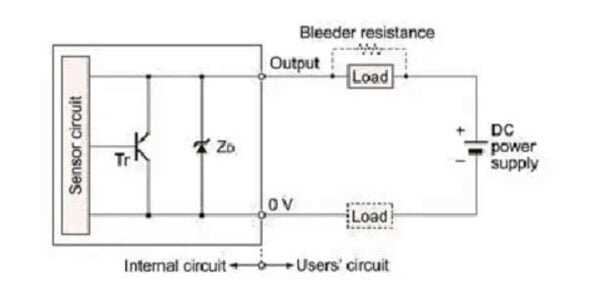
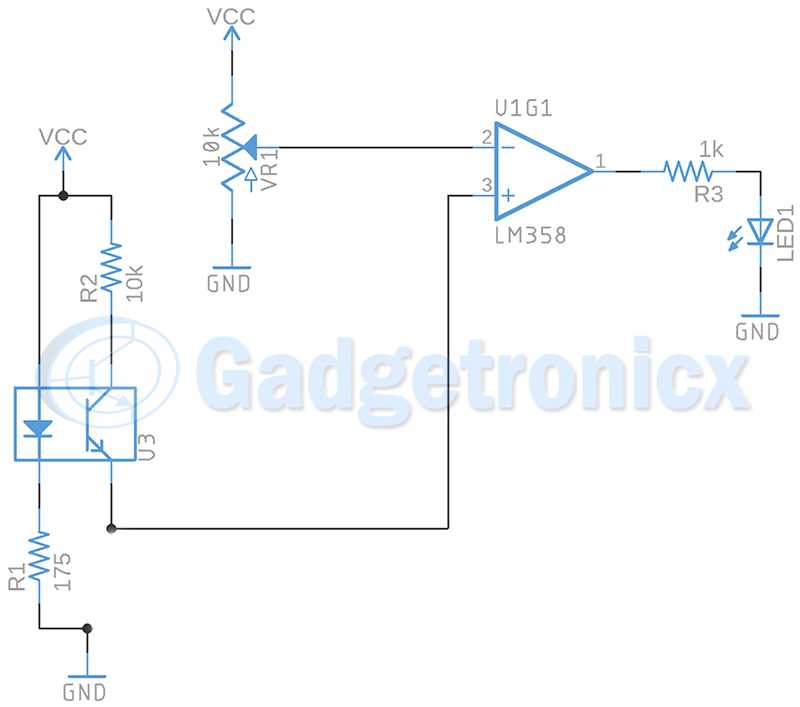
Use an infrared emitter paired with a photodiode for accurate object detection within a 10–15 cm range. Connect the emitter to a stable 5V supply and limit current with a 220Ω resistor to prevent overheating. The photodiode should face the emitter directly, with its output linked to a high-gain amplifier to detect subtle changes in reflected light.
Integrate a comparator module to convert analog reflections into clear digital signals. Adjust the reference voltage carefully using a potentiometer between 2.5V and 3.3V depending on ambient light levels. This ensures consistent triggering when objects approach the sensing field.
Include a decoupling capacitor (0.1 μF) near the power pins to reduce electrical noise that may cause false activations. For extended ranges beyond 20 cm, consider a reflective surface coating or using a higher-intensity infrared LED while keeping the photodiode in line with the light path.
For switching devices, connect the comparator output to a transistor stage capable of handling the target load. An NPN transistor with a 1 kΩ base resistor works well for small relays or indicator LEDs. This arrangement provides reliable actuation without directly stressing the amplifier or photodiode.
Ensure proper alignment and shielding from ambient light sources. Even small angles between the emitter and detector can reduce sensitivity, so maintain a precise parallel orientation. Testing under real conditions is recommended to fine-tune the thresholds and achieve repeatable detection.
Proximity Sensor Circuit Diagram
Use a 555 timer in astable mode to produce a continuous pulse signal for the detection module. Connect pin 8 to +9V, pin 1 to ground, and adjust the resistors between pins 7 and 6 to control the pulse width and frequency precisely.
An infrared emitter and photodiode pair should be positioned facing each other with a 2–3 cm gap for optimal reflection detection. Ensure the photodiode anode connects to a 5V supply through a 10kΩ resistor, and the cathode leads to the input of a transistor amplifier for signal amplification.
The amplifier stage requires an NPN transistor, such as BC547, with the base receiving the photodiode output through a 1kΩ resistor. Collector connects to +5V via a 4.7kΩ pull-up resistor, and emitter goes to ground. This arrangement ensures a clean digital output suitable for triggering microcontroller inputs.
Include a debounce network using a 0.1 µF capacitor across the transistor output to smooth rapid fluctuations caused by small object movements. This reduces false triggering and improves stability of the detection module.
Power the entire assembly with a regulated 5–9V DC supply. Place a 100 µF electrolytic capacitor across the supply rails near the emitter-receiver pair to filter voltage spikes and prevent intermittent behavior caused by sudden load changes.
Wire the output to an LED indicator in series with a 220Ω resistor to visually confirm detection events. For integration with other systems, the output can also drive a relay module rated for 12V, allowing activation of external devices without additional amplification stages.
Choosing Components for a Reliable Proximity Sensor
Select an infrared LED with a peak wavelength of 940 nm and a forward current rating of 20 mA for consistent signal reflection. Pair it with a matching photodiode that has a fast response time under 10 µs to ensure rapid detection of moving objects.
Resistors should be metal-film types for precision and low temperature drift. Recommended values: 10kΩ for photodiode load, 1kΩ for transistor base current limiting, and 4.7kΩ pull-up on the output stage. Capacitors must handle voltage spikes; use 0.1 µF ceramic for filtering and 100 µF electrolytic for power stabilization.
Amplification and Switching Elements
- Choose an NPN transistor like BC547 or 2N3904 with hFE between 200–450 for signal amplification.
- Use logic-level MOSFETs, such as IRL540N, if driving higher current loads directly from the output pin.
- Relays should have a coil voltage matching your supply and a contact rating at least twice the expected load to prevent premature failure.
Power and Stability Components
- Voltage regulators like LM7805 for 5V or LM7809 for 9V stabilize supply for the emitter-receiver pair.
- Decoupling capacitors of 100 nF near the supply pins reduce high-frequency noise.
- Fuse rating should be 1.5 times the maximum expected current to protect sensitive elements.
Connect LED indicators in series with 220Ω resistors for visual confirmation. For external triggers, ensure the output device can handle the voltage and current limits of the amplification stage. Solid-state switches reduce mechanical wear if frequent switching is required.