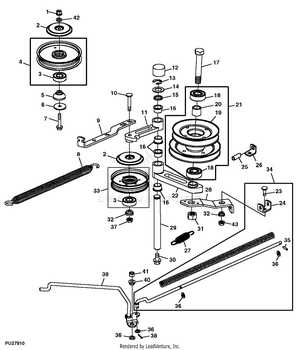
For a seamless maintenance experience, ensure you have a clear breakdown of all components of the cutting assembly. Identifying each element by its specific function allows for quick troubleshooting and more precise repairs. Begin with the drive belt system, where tension adjustment plays a significant role in the unit’s performance. A worn or misaligned belt can result in uneven cuts or a complete failure to engage the blades.
The blade spindles are another critical area that requires attention. Over time, these can accumulate debris or even seize up, which can compromise both the longevity of the blades and the quality of the mowing. Be sure to check the grease fittings and replace any damaged bearings to maintain smooth operation.
The lift mechanism often goes unnoticed but is equally important. Make sure the linkage operates without friction and the springs are correctly tensioned. Misadjustments here can cause uneven cutting heights and lead to premature wear of the undercarriage.
Finally, regular inspection of the frame and mounting points guarantees that all parts remain securely in place, preventing unexpected breakdowns. Tighten any loose bolts and replace worn-out bushings to keep everything functioning as expected.
Key Components of the Lawn Equipment Cutting Mechanism
For efficient maintenance and repair of the cutting assembly, understanding the breakdown of individual elements is crucial. These parts work together to ensure smooth operation and optimal performance. Begin with identifying the blade spindles, which are central to driving the cutting blades. They rotate the blades and are connected to pulleys that manage the motion. Pay attention to the bearings in the spindle assembly, as they often wear out, causing friction and noise. Replacing these components promptly prevents further damage.
Next, the belt system transfers power from the engine to the blades. Inspect the tensioners for proper adjustment. Over-tightened belts can cause undue strain on the engine, while loose belts may fail to drive the cutting blades effectively. Regularly check for wear and tear, especially for cracks or fraying, as these can lead to belt failure during operation.
The blade itself requires a sharp edge for clean cutting. If the blade becomes dull or chipped, replace it immediately to avoid uneven grass cutting. Ensure the blade is balanced after sharpening to avoid vibrations that can lead to premature wear on other parts, such as the pulleys or bearings.
The deck shell, which houses the blades, plays a role in the uniformity of the cut. Ensure it’s free from grass buildup and debris, which can affect airflow and the performance of the cutting system. A clogged deck reduces efficiency and can even cause overheating of the engine. Inspect the deck for cracks or signs of damage to avoid costly repairs.
Lastly, the discharge chute directs cut grass away from the blades. Ensure it’s not obstructed, as blockages can result in poor grass distribution and can even stall the cutting process. Regular cleaning of the chute is essential for uninterrupted performance.
How to Identify and Replace Key Components of the Mower Assembly
Inspect the blades regularly for wear. If they appear dull or chipped, remove them and replace with new ones. To replace, lift the front section, remove the securing bolts, and install the new blades securely, ensuring they are properly aligned.
Next, examine the spindles. If there’s noticeable play or difficulty turning, the bearings may need replacement. Disconnect the assembly from the power source, remove the drive belt, and detach the spindles. Install the new ones, making sure they’re tightened properly to avoid further damage.
The belt plays a critical role in transferring power. Look for fraying or cracking along its length. If damaged, remove the belt by loosening the tensioner pulley and sliding it off. Install a new belt, ensuring it fits snugly and aligns with the pulleys to prevent slippage.
Check the pulleys for rust or wobbling. If there’s any irregular movement, it’s best to replace them. Use a wrench to remove the bolt securing the pulley, then replace with a new one, ensuring the bearings are intact and free from debris.
Inspect the hardware, including nuts and bolts. Over time, they can become loose or rusted, affecting the performance of the system. Tighten any loose bolts and replace any corroded ones to ensure stability.
Finally, clean the entire assembly after each use. Grass buildup can lead to inefficiency and even component failure. Use a scraper or brush to remove debris, paying close attention to the underside. A clean system will extend the lifespan of your equipment and maintain smooth operation.
Common Troubleshooting Tips for John Deere 345 Mower Deck Parts
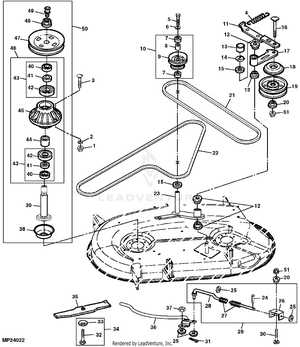
If the cutting mechanism isn’t working properly, check the belt tension. A loose or worn belt can cause uneven cutting or skipping. Replace any damaged belts promptly to restore optimal performance.
Inspect the spindle assembly for signs of wear or damage. Spindles that are bent or corroded can lead to poor blade rotation and reduce the efficiency of the system. Tighten or replace any loose or damaged components to ensure smooth operation.
Examine the blade condition regularly. Dull or chipped blades result in jagged cuts and put extra strain on the motor. Sharpen or replace blades if they are worn down to maintain proper cutting quality.
Check the height adjustment mechanism for accurate functionality. If the height is inconsistent or the machine drags on the ground, it may be due to a malfunctioning lift assembly. Inspect and repair any faulty lift components for smoother operation.
Verify that the idler pulleys and tensioners are intact and not worn out. A damaged pulley can cause the drive belt to misalign, leading to a loss of power to the cutting blades. Replace worn pulleys to restore belt alignment and prevent further issues.
Ensure the bearing housing is properly lubricated to prevent overheating and damage. Lack of lubrication can lead to excessive friction, affecting the overall function of the cutting mechanism. Apply grease to the bearing housing at regular intervals to avoid this problem.
Inspect the mounting bolts for proper tightness. Loose bolts can lead to vibrations and uneven operation, which may cause additional wear on surrounding components. Tighten all bolts to the manufacturer’s specified torque to prevent this issue.