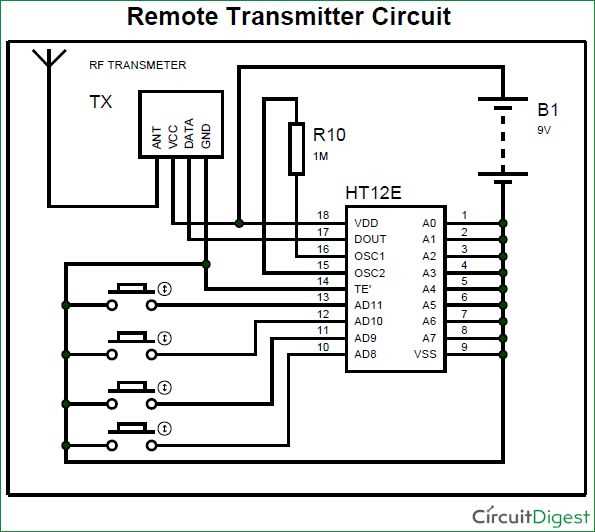
Use high-quality transistors rated for 12V to handle multiple outputs without overheating. Ensure the power supply provides stable voltage above 9V to prevent signal drops during operation.
Position the emitter and collector of each switching device accurately according to the layout to avoid cross-interference. Keep wiring short and insulated to reduce noise and maintain signal integrity.
Include decoupling capacitors near the power pins of the microcontroller to stabilize voltage and prevent resets. Values between 100nF and 470nF are recommended for smooth operation.
Test each output independently before connecting loads. Use LEDs with series resistors to verify functionality and confirm that each activation triggers the correct relay or actuator without overlap.
Label all connections clearly on a breadboard or prototype board to avoid confusion during assembly and future maintenance. Consistent labeling reduces errors when scaling the setup or replacing components.
Setting Up a 4 Output Wireless Module
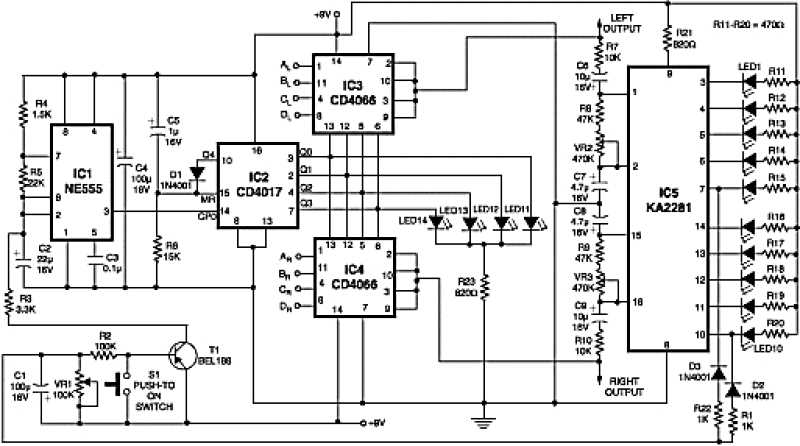
Connect each transmitter pin to a dedicated switching device with a series resistor between 220Ω and 1kΩ depending on the load type. Ensure proper grounding to prevent signal interference and voltage spikes.
Test each relay independently using a small LED before attaching mechanical loads. Adjust the power supply to maintain a steady 12V to prevent relay chatter or misfiring. Shorter wiring paths reduce latency and improve response reliability.
Components Required for a 4 Output Wireless Setup
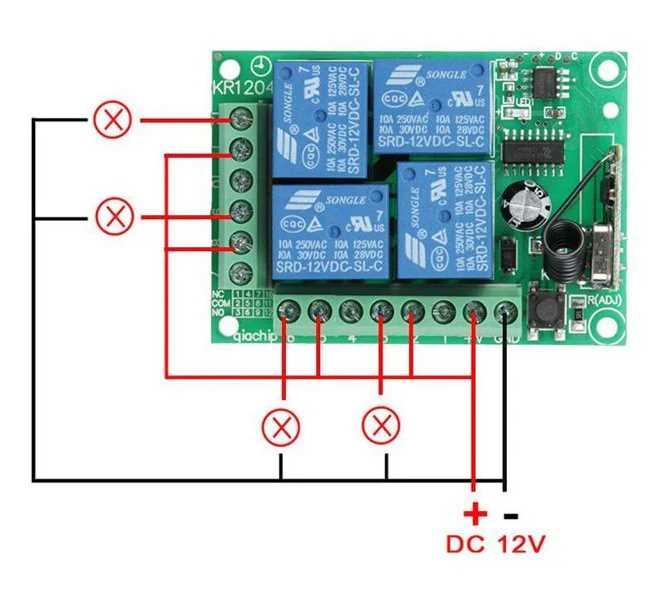
Use reliable transistors rated for at least 12V and 1A to drive multiple loads without overheating. Include a 12V DC adapter with at least 2A capacity to ensure stable operation. Breadboards or prototype boards should have short, insulated connections to reduce signal loss.
Organize the module parts before assembly:
- 4 miniature relays or solid-state switches for independent outputs
- 4 push-button transmitters with integrated resistors
- Microcontroller unit or decoder module for signal processing
- Capacitors between 100nF and 470nF for voltage stabilization
- Series resistors between 220Ω and 1kΩ to limit current to LEDs or relays
- Wires with proper insulation for low-noise connections
- LED indicators for testing each output before connecting heavier loads
Label each connection and component to simplify assembly and troubleshooting. Testing components individually ensures that faults are identified early, preventing damage to sensitive parts and improving overall reliability.