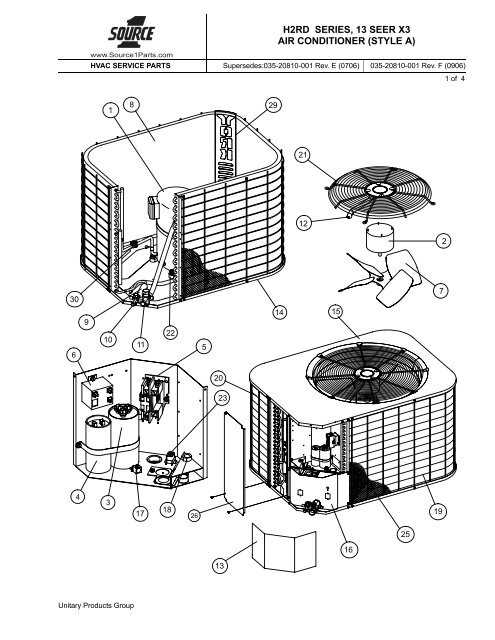
When troubleshooting or upgrading a home ventilation system, understanding the structure of the device is key. The various components work together to regulate indoor conditions, ensuring comfort and efficiency. Each part plays a distinct role in maintaining airflow, temperature, and overall system operation.
The blower motor, for instance, is the driving force behind the circulation of air. It pushes the conditioned air through the ducts, distributing it evenly across the living space. Another critical component, the evaporator coil, cools the air as it moves through the system. By using refrigerant, this element absorbs heat from the air, lowering its temperature before it enters the rooms.
The condenser unit is another piece that facilitates heat exchange, expelling the absorbed heat outdoors. Proper maintenance of these components ensures the system’s reliability, reducing wear and the likelihood of system failure. Finally, the ductwork itself serves as the pathway, directing the air throughout the building, often influenced by the installation quality and overall design.
Each of these parts needs to be properly serviced to maintain energy efficiency and extend the life of the equipment. Neglecting even a small element can lead to performance issues, higher energy bills, and premature breakdowns.
Understanding Components of a HVAC System
The cooling unit operates through a network of interconnected elements. Each piece plays a significant role in maintaining optimal conditions within a building. The compressor, for example, pumps refrigerant through the system, enabling heat exchange and temperature regulation. The evaporator coil absorbs heat from indoor spaces, while the condenser coil releases it outside. The blower motor ensures the proper circulation of air throughout the structure.
Flexible ductwork distributes conditioned air to various rooms. Insulated pipes and vents prevent temperature loss during transportation. The expansion valve controls refrigerant flow, adapting it to changes in system demands. A thermostat regulates temperature by controlling the compressor and fan cycles based on user settings.
Filters are responsible for trapping debris and contaminants, ensuring only clean air circulates inside. The drain line removes excess moisture from the evaporator coil, preventing water damage and mold growth. Proper maintenance of these elements is key for optimal performance and longevity of the system.
Understanding the Function of the Compressor in Cooling Systems
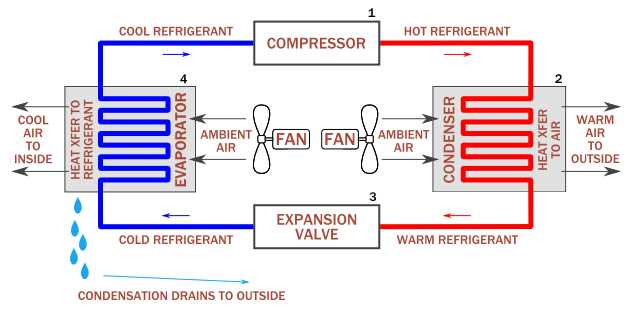
The compressor is responsible for pressurizing refrigerant and circulating it through the system. It draws in low-pressure, gas-phase refrigerant and compresses it to a high-pressure, high-temperature state. This pressurized refrigerant is then pushed into the condenser, where it releases heat and turns into a liquid. The compression process increases the temperature and pressure of the refrigerant, allowing it to absorb heat from the environment and release it efficiently during cooling. If the compressor fails, the system cannot maintain the required pressure levels, leading to a breakdown in cooling performance.
Maintaining proper compressor function is critical. Regularly checking for unusual noises or vibrations can help detect early signs of wear. If the compressor is overheating or is difficult to start, it may indicate electrical issues or blocked refrigerant flow. Ensuring the refrigerant charge is correct and that no leaks exist also prevents compressor damage. A well-maintained compressor improves system longevity and efficiency, reducing the need for costly repairs or replacements.
Identifying Key Components in the Air Handler Unit
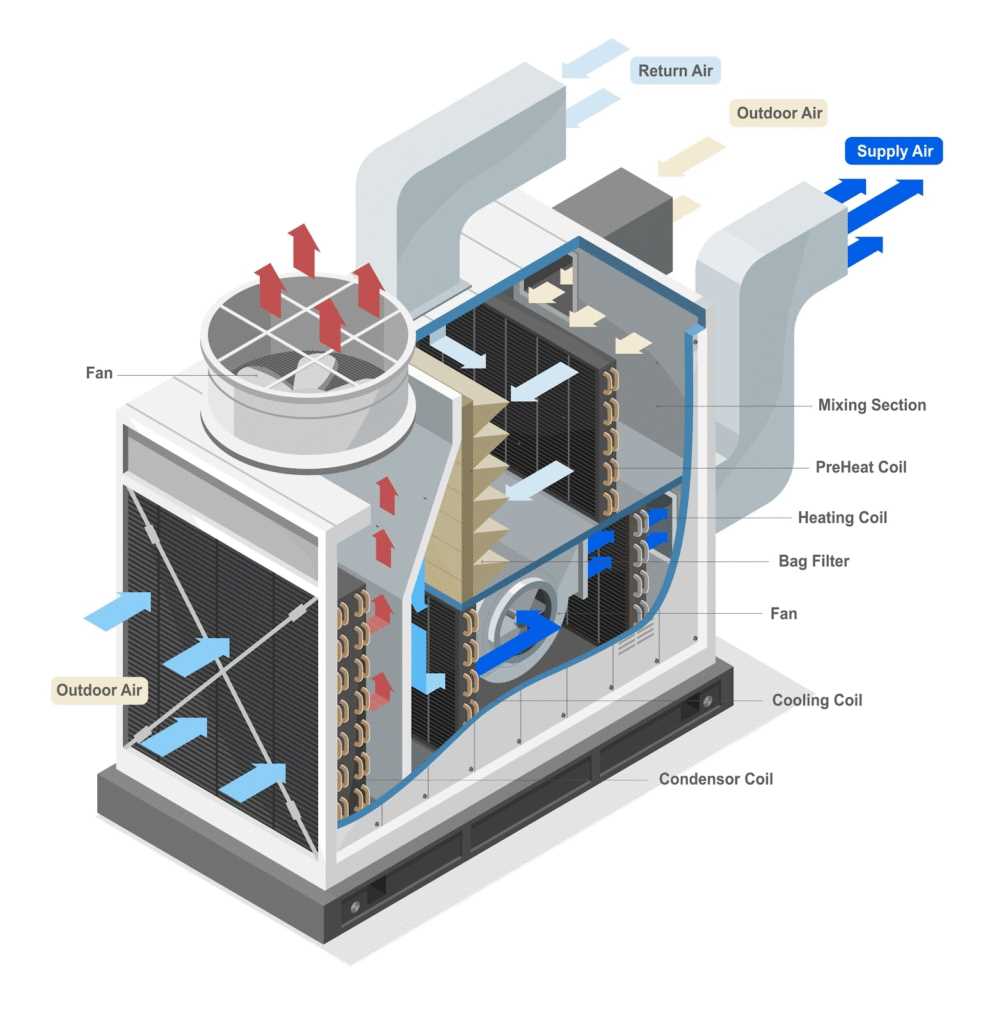
To understand the structure of the handler unit, focus on these main elements:
- Blower Fan: This component moves the conditioned medium through ducts to various spaces. Its size and speed determine the airflow rate.
- Evaporator Coil: Located in the handler, this part absorbs heat from the medium and cools it before it reaches your living areas. Clean the coil periodically to maintain proper function.
- Heat Exchanger: In units that also provide heating, this element transfers heat to the circulated medium, providing warmth during colder seasons.
- Filter: The filter captures dirt, dust, and debris, preventing them from entering the unit and clogging the blower. Replace or clean it regularly to maintain optimal airflow.
- Drain Pan: Any moisture removed from the circulated substance collects here. Ensure the pan is free of clogs to prevent overflow and water damage.
- Control Board: This is the brain of the handler unit, regulating the operation of the fan, coils, and thermostat. A malfunctioning control board can lead to uneven climate control.
Each of these components plays a distinct role in maintaining the handler unit’s performance. Regular inspection and maintenance can help you avoid costly repairs.
How the Condenser Coil Contributes to Heat Exchange in Cooling Systems
The condenser coil plays a pivotal role in the heat exchange process by expelling the heat absorbed from the space being cooled. As refrigerant gas flows through the coil, it releases heat into the surrounding air. The coil is typically located outside, where the heat can be effectively dissipated. This process relies heavily on airflow and the temperature difference between the refrigerant and the outside environment. The refrigerant, initially in a high-energy gaseous state, condenses into a liquid as it passes through the coil, releasing heat in the process. For optimal performance, it’s critical that the condenser coil remains clean and free from obstructions that could impede airflow, as this would reduce its ability to release heat. Regular maintenance, such as clearing debris and ensuring proper fan operation, helps maintain the efficiency of the heat transfer process.
The material and design of the coil also impact its ability to transfer heat. Copper or aluminum coils are commonly used due to their high thermal conductivity, ensuring efficient heat exchange. The larger the surface area of the coil, the more heat it can expel, which is why modern systems often use fins or multi-tube designs to increase efficiency. Any decrease in airflow or degradation of coil material can result in less heat being removed, causing the system to work harder and use more energy. It’s also worth noting that external conditions, such as ambient temperature, can influence the coil’s performance–hotter outdoor temperatures make it harder for the refrigerant to lose heat.
For maximum heat transfer, the refrigerant temperature must remain as high as possible when entering the coil. Ensuring that the coil is not exposed to excessive heat buildup or other operational issues will prevent inefficiency and help maintain cooling performance. When functioning correctly, the condenser coil is integral to converting the high-pressure gas into a liquid, allowing the refrigerant to be cycled through the system to continue the cooling process.