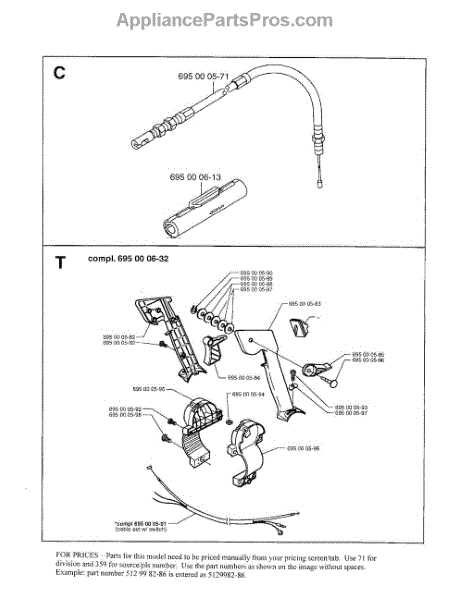
Start by regularly checking the key components of your equipment to ensure smooth operation. Understanding the assembly and functionality of individual elements helps prevent malfunctions and costly repairs. The fuel tank, air filter, spark plug, and blower tube are critical areas that demand attention during routine checks.
If your equipment is losing power or not starting, focus on inspecting the fuel delivery system and ignition components. A clogged air filter or faulty spark plug can often lead to poor performance. Replacing these parts at the first sign of trouble can prevent more serious issues down the line.
Additionally, consider keeping a set of common replacement parts on hand for quick fixes. This includes spare spark plugs, filters, and fuel lines. Regular maintenance extends the life of your machine and keeps it operating at peak efficiency. Make sure to clean or replace the spark arrestor if it’s clogged, as this can cause overheating and engine failure.
Parts Breakdown and Maintenance Tips for Optimal Performance
To maintain peak functionality, regularly inspect the engine, blower assembly, and fuel system. Start with the fuel filter, which should be cleaned or replaced every season to prevent clogs. A dirty filter reduces airflow and impacts performance.
Next, check the air filter. A clogged filter restricts airflow to the engine, making it work harder. Clean the filter regularly and replace it if it’s too damaged or heavily soiled. Ensure the spark plug is in good condition, as a worn spark plug can cause misfires and starting issues.
- Fuel lines should be free of cracks or leaks. Check them periodically and replace any damaged sections to prevent fuel loss or contamination.
- Inspect the blower tubes for cracks or debris blockages. Clear any debris to maintain maximum airflow, ensuring effective operation.
- Lubricate moving parts like the fan blades and motor to prevent wear and tear. This will extend the life of your machine and ensure smooth operation.
Cleaning the exhaust port and checking the spark arrestor are also critical steps. A clogged arrestor can cause the engine to overheat, which may lead to damage. Regularly check for buildup and clean it out as needed.
Lastly, store your equipment in a clean, dry area to avoid corrosion. Before long-term storage, empty the fuel tank and clean the machine thoroughly. This simple practice will keep the machine in optimal working condition for the next use.
How to Identify and Replace Common Components
Begin by inspecting the spark plug. If the machine struggles to start or runs inconsistently, remove the plug and check for carbon buildup. Clean it using a wire brush or replace it if it’s worn out. A new spark plug improves ignition efficiency and reduces engine misfires.
Next, examine the fuel filter. If fuel flow is restricted, the engine may lose power or stop running altogether. Replace the filter by removing it from the fuel line and installing a new one. Make sure the replacement filter matches the specifications for your model.
The air filter is another component that should be checked regularly. A clogged filter reduces airflow to the engine, making it work harder. Remove the filter and clean it by tapping it lightly or washing it with mild soap and water. Replace it if it appears damaged or excessively dirty.
Inspect the fuel lines for cracks, leaks, or other damage. Fuel leaks can cause performance issues and safety hazards. If you notice any signs of wear, replace the affected fuel lines. Ensure all connections are secure after installation.
Finally, check the blower tubes for obstructions or cracks. If the airflow is weak or inconsistent, remove the tubes and inspect them for debris. Clear out any blockages, and replace the tubes if they are cracked or otherwise damaged to maintain proper airflow and performance.
Step-by-Step Guide to Assembling Components
Start by attaching the handle to the main body. Align the holes on the handle with the corresponding slots on the frame. Use the provided screws to secure the handle in place, ensuring they are tightened but not overtightened to avoid damaging the threads.
Next, connect the blower tubes. Slide the tubes onto the output nozzle and twist them clockwise to lock into place. Ensure that both tubes are securely attached to prevent any air leakage or disconnection during operation.
Install the air filter by aligning it with the designated compartment. Press it firmly into place until it fits snugly. If your model has a cover for the filter, place it over the filter and secure it with the latch or screws provided.
Attach the spark plug wire to the spark plug. Ensure the wire is fully connected to the spark plug terminal and that it fits securely. This step is crucial for proper ignition and engine performance.
Connect the fuel tank to the main body by aligning the fuel line with the inlet. Use the provided clips or screws to hold the tank in position. Double-check the connection for leaks before moving on to the next step.
Finally, check all connections, tighten any loose screws, and ensure the components are securely assembled. Test the device by turning it on and verifying that all parts are functioning correctly, with no unusual sounds or vibrations during operation.