Ensure power lines are properly matched to the input terminals to prevent overload and maintain consistent performance. Use a fuse rated between 10A and 15A for protection on the main supply line and keep the positive and negative paths clearly separated to avoid short circuits.
Identify the switching contacts before integrating additional devices. Typically, the control input engages the main current path when energized, so labeling each pin and confirming continuity with a multimeter is recommended before final connections.
Use stranded copper wires for flexible connections and crimp terminals tightly to avoid intermittent contact. For applications with motors or lighting, ensure the gauge supports at least 15A current flow to prevent voltage drops and excessive heat buildup.
Test the assembly under no-load conditions first. Apply 12V to the control input and verify that the output switches correctly without any sparks or unusual heating. Once verified, integrate the controlled device and monitor the system during the initial run.
Understanding 12 Volt Relay Connections for Automotive and DIY Projects
Connect the main supply to the designated input terminals and confirm polarity before integrating any devices. Use a 10A–15A fuse inline with the positive path to protect the control module, and ensure the negative lead is securely grounded to the chassis or a stable reference point to prevent erratic operation.
Label all switching contacts and verify continuity using a multimeter before activating the system. For motor or lighting circuits, use stranded copper wires of appropriate gauge to handle peak currents, and test the assembly under no-load conditions to ensure smooth engagement without sparks or overheating.
Identifying Relay Terminals and Their Functions
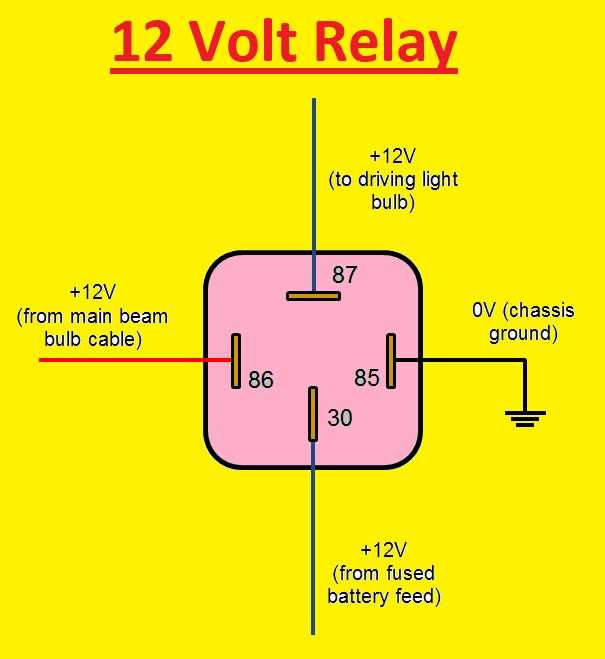
Locate the coil terminals first as they control the switching action. Typically marked with numbers 85 and 86, one side connects to the control signal while the other requires a secure ground to complete the activation path.
Check the common terminal, usually labeled 30, which serves as the primary input for the high-current load. Ensure it is firmly connected to the power source that drives the device, avoiding any loose contacts that could cause voltage drops.
The normally closed contact, marked 87a, maintains a closed path when the control signal is absent. Use it in circuits where a default active state is required, such as safety interlocks or standby lighting circuits.
The normally open terminal, labeled 87, closes only when the coil is energized. Confirm that this connection can handle the intended load, and route wiring to avoid excessive bending that could weaken the contact over time.
For relays with multiple poles, identify each set individually and document their corresponding connections. Cross-reference manufacturer markings to avoid misrouting high-current paths that could damage components or cause heat buildup.
Label all terminals clearly on your control module or panel before powering up the system. Use color-coded wires where possible, matching standard automotive or DIY conventions to prevent miswiring during troubleshooting or maintenance.
Test each terminal with a multimeter for continuity before integrating devices. Engage the coil momentarily and confirm that the correct contacts switch as expected, ensuring reliable performance under full operational load.