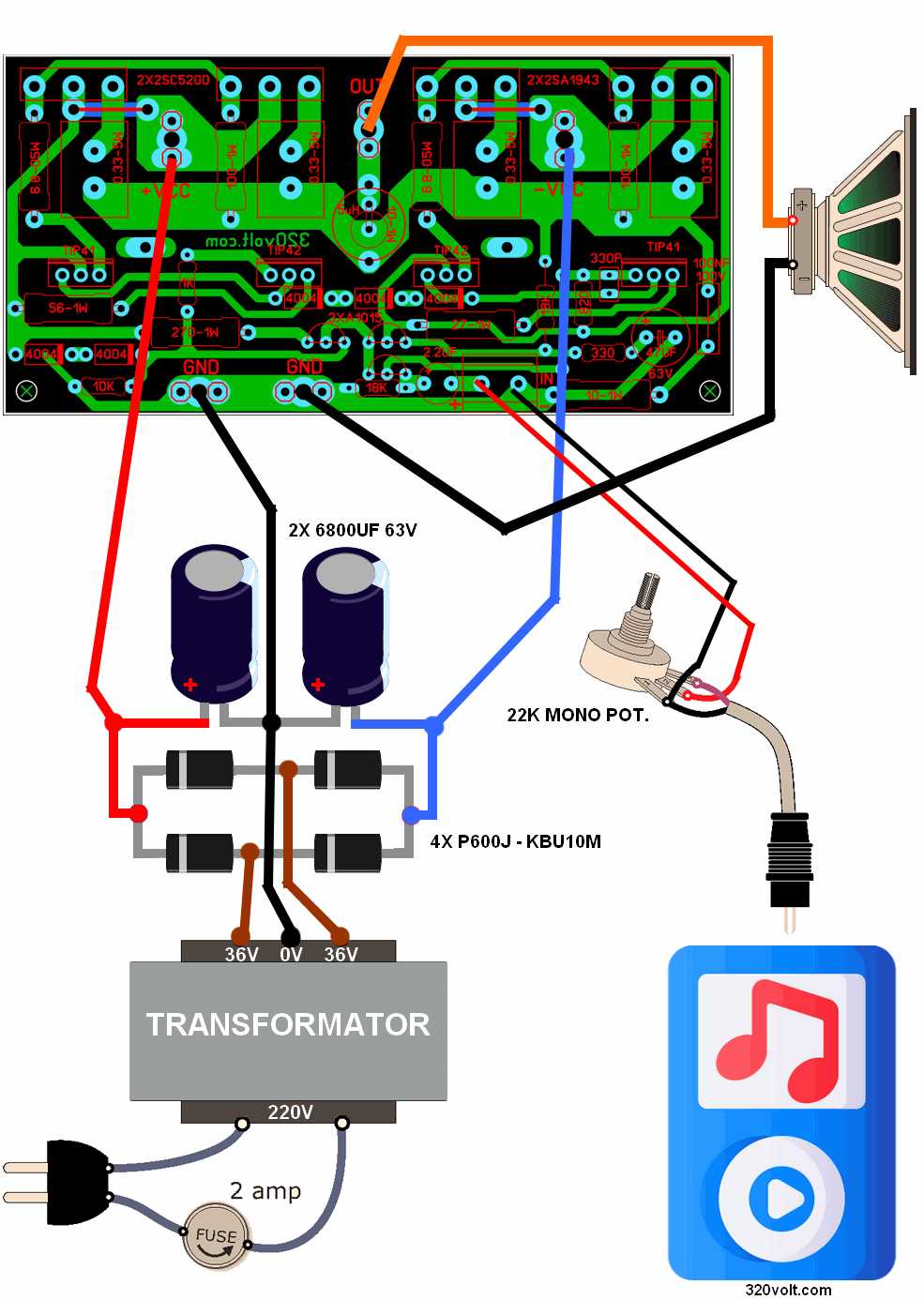
Use a regulated 12V to 14V power supply to ensure stable operation and prevent overheating of the unit. Incorrect voltage can damage transistors and reduce output efficiency.
Select MOSFETs or bipolar transistors rated for at least 25A and 100V to handle transient peaks. Ensure heat sinks are mounted with thermal paste to maintain safe operating temperatures.
Integrate low-pass filters with 80Hz cutoff frequency to focus on deep bass signals. Capacitors should have low ESR to reduce ripple and preserve signal clarity.
Connect input and feedback resistors according to a 10:1 ratio to maintain gain stability. Precision resistors with 1% tolerance are recommended to avoid distortion.
Test the assembly with a dummy load rated for 200W before connecting to speakers. This prevents damage and allows verification of voltage swings and thermal performance.
200w Subwoofer Amplifier Construction and Connection Guide
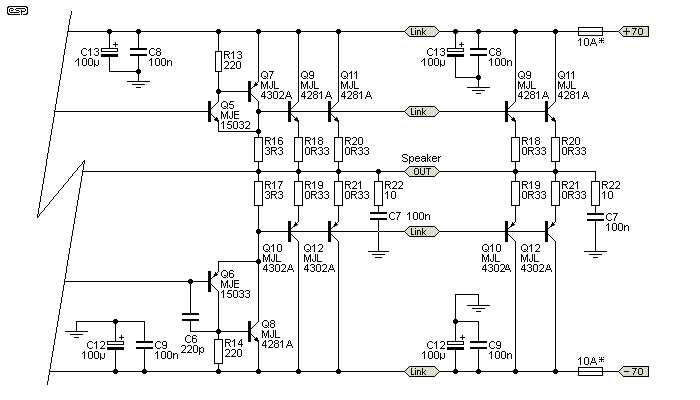
Use a high-current transformer or switching supply rated for at least 20A to ensure stable operation. Voltage fluctuations above 15V can trigger thermal shutdown or damage output transistors.
Mount power transistors on aluminum heat sinks with thermal paste and insulators. Each transistor should have at least 50cm² surface area for optimal heat dissipation and safe continuous operation.
Follow a star grounding layout to reduce hum and interference. Connect input, output, and power grounds to a single point to maintain signal integrity and minimize cross-talk.
Install low-pass and high-pass filtering components close to the output terminals. Use polypropylene capacitors and low-inductance resistors to maintain accurate frequency response for bass reproduction.
Verify connections with a dummy resistive load rated for the output wattage before attaching the speaker. Measure voltage and current swings to ensure the assembly operates within safe thermal and electrical limits.
Selecting Components and Understanding Power Requirements
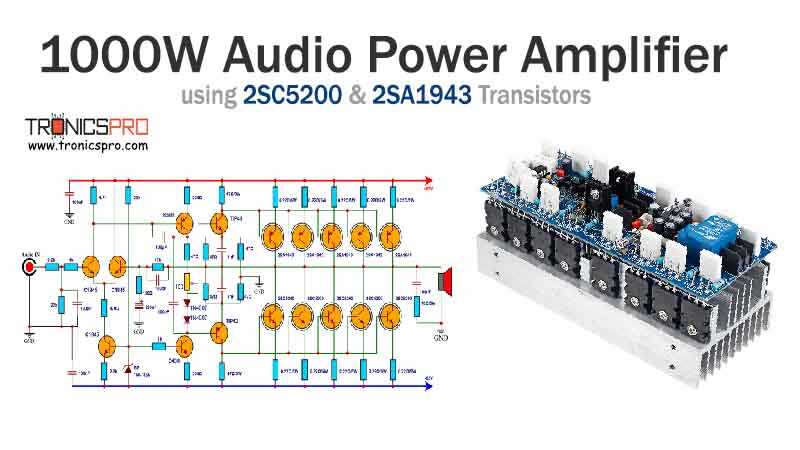
Choose transistors and MOSFETs rated for at least 25% higher voltage and current than the maximum expected load. This margin prevents thermal runaway and extends lifespan under continuous high-power operation.
Use capacitors with low equivalent series resistance (ESR) for power supply filtering. Film or electrolytic types rated for 50V or higher stabilize voltage swings and maintain clean output under dynamic signals.
Select resistors and potentiometers with tolerance below 1% for critical feedback and gain control points. This ensures consistent frequency response and prevents audible distortion in low-frequency ranges.
Determine the total power requirement by summing RMS load ratings plus 20% headroom. For a speaker rated 200W RMS, design supply rails for at least 240W to accommodate transient peaks without clipping.
Choose a transformer or switching supply capable of supplying continuous current above peak demands. For a dual-channel configuration, plan for currents exceeding 15A at 28V to avoid voltage sag and thermal stress.
Integrate protection components such as fast-blow fuses and thermistors. These limit inrush current and prevent component failure during short-term overloads.
Test all component selections using a resistive load or dummy speaker. Measure voltage, current, and thermal behavior across the assembly to confirm that chosen parts meet operational and safety margins.