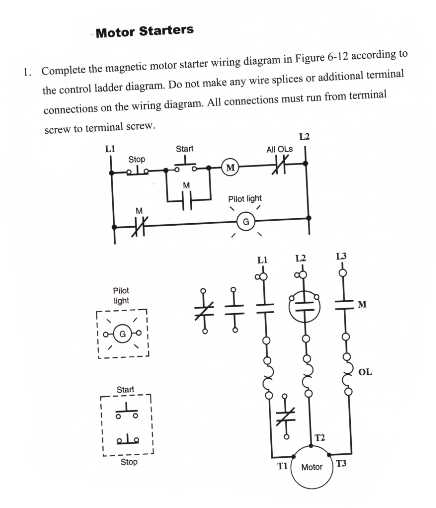
Use a three-pole contactor with a properly rated coil and connect the supply phases directly to the input terminals L1, L2, and L3, while the outgoing lines to the motor attach to T1, T2, and T3. Place a thermal overload relay between the contactor output and the motor conductors to prevent damage during prolonged overcurrent conditions. Coil voltage must match the control supply; a mismatch leads to unstable operation or immediate failure.
The control circuit usually includes a momentary “start” pushbutton and a normally closed “stop” pushbutton. Route the control phase through the stop button first, then through the start button, and finally to the coil terminal. A holding contact from the contactor connects in parallel with the start button so the coil remains energized after the button is released. Without this auxiliary contact loop, the device disengages as soon as pressure on the button ends.
Pay attention to conductor cross-section and terminal tightening torque. Copper lines supplying small industrial motors often range from 1.5 mm² to 4 mm² depending on load current. Loose terminals produce heat buildup and intermittent contact. Mark each terminal clearly–L-side for incoming power, T-side for the motor path, and A1/A2 for the coil–to prevent confusion during maintenance or troubleshooting.
Grounding must connect directly to the motor frame and the control enclosure. A protective earth conductor with low resistance ensures fault current flows safely if insulation fails. Install short-circuit protection upstream using a circuit breaker rated slightly above the motor’s nominal current. This arrangement stabilizes operation and reduces the chance of equipment shutdown during normal load fluctuations.
Contactor Control Circuit Layout for Motor Switching
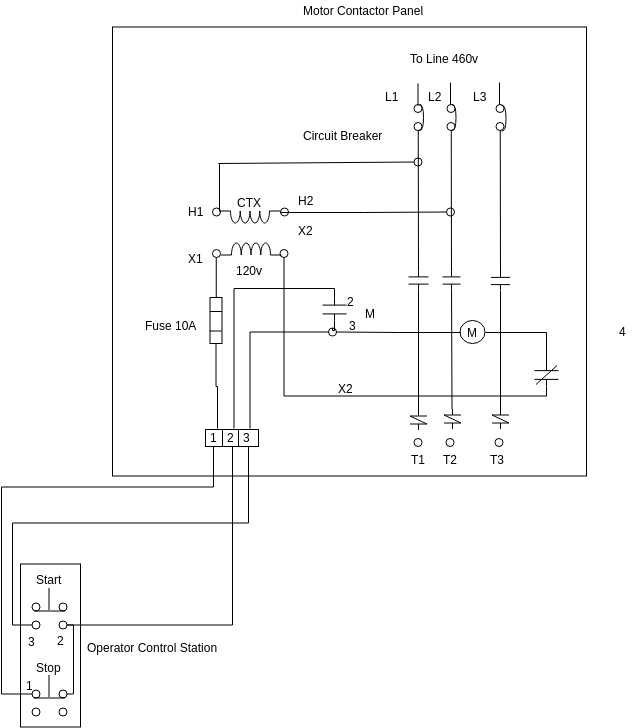
Use a three-phase contactor with an overload relay and route the supply lines through the main power terminals (L1, L2, L3) while connecting the motor leads to the output terminals (T1, T2, T3). The coil control path should pass through a stop push-button (normally closed) and a run push-button (normally open). Place the overload relay auxiliary contact in series with the coil so that a thermal trip interrupts the control circuit immediately.
A practical connection plan separates power conductors from the control circuit. The high-current path carries line voltage directly through the contactor poles to the motor. The low-current control path energizes the coil using a smaller gauge conductor. Install a holding contact (auxiliary normally open) in parallel with the run push-button. After the operator presses the run button, this auxiliary contact closes and maintains coil energization until the stop button interrupts the circuit.
Correct terminal mapping prevents phase imbalance and accidental short circuits. Connect incoming phases to L-terminals in consistent order, then link T-terminals to the motor leads using the same sequence. A reversed phase pair changes rotation direction, which may damage pumps, fans, or conveyor drives. For installations using 230 V or 400 V coils, confirm the control voltage source and connect the coil terminals (often labeled A1 and A2) through protective devices such as a fuse rated between 1 A and 2 A.
Panel assembly benefits from structured routing: place the contactor in the center of the control enclosure, mount the overload relay directly beneath it, and keep push-button lines along a dedicated terminal strip. Label each conductor with numeric markers that match the connection plan. Maintenance staff can trace faults faster when every control element–stop switch, run switch, auxiliary contact, overload contact, and coil–is clearly identified along the circuit path.
How to Identify and Connect Line, Load, and Control Terminals on a Contactor Assembly
Locate the incoming power points first: terminals marked L1, L2, L3 usually indicate supply input on a contactor block. These positions accept voltage directly from the distribution panel. Verify marking stamps on the metal frame or molded plastic base; manufacturers typically place them above the top row of screw clamps. Use a multimeter set to continuity or resistance to confirm that these terminals are electrically isolated from the outgoing set while the coil is inactive.
The outgoing motor conductors connect to the lower group labeled T1, T2, T3 or occasionally 2T1, 4T2, 6T3. These posts feed current to the motor once the internal contact bridge closes. Inspect the mechanical layout: supply terminals are positioned above the moving contact assembly, while the motor side sits below it. This arrangement reduces cable crossing and shortens conductor paths inside the enclosure.
Control circuit points differ from power connections. Small terminals labeled A1 and A2 energize the coil that pulls the contact mechanism. One side normally receives phase or positive control voltage, while the opposite side routes through switches, push buttons, or safety interlocks. Typical coil ratings include 24 V, 120 V, or 230 V; the exact value is printed near the coil housing. Applying higher voltage than specified overheats the winding within seconds.
Trace the conductor route physically before tightening screws. Supply cables usually have larger cross-section areas (for example 4–10 mm² in small industrial drives) compared with control leads that rarely exceed 1.5 mm². Terminal clamps are sized accordingly; forcing thick conductors into auxiliary points often damages threads or prevents proper tightening torque.
Confirm terminal identity using numbering patterns. European contactor standards follow IEC 60947, where odd numbers represent input and even numbers correspond to output. For instance, terminal 1 pairs with 2, 3 pairs with 4, and 5 pairs with 6. During coil activation, these pairs close simultaneously, sending power from each upper terminal to the matching lower one.
Quick Verification Before Energizing
Perform three checks: ensure supply wires sit on the L-marked row, verify motor leads occupy the T-marked row, and confirm the coil pair A1/A2 receives the correct control voltage path through push buttons or relays. Tighten terminal screws to manufacturer torque values (commonly 1.2–2.5 Nm for small frames). Loose clamps create heat buildup and contact pitting after repeated switching cycles.
Typical Identification Mistakes
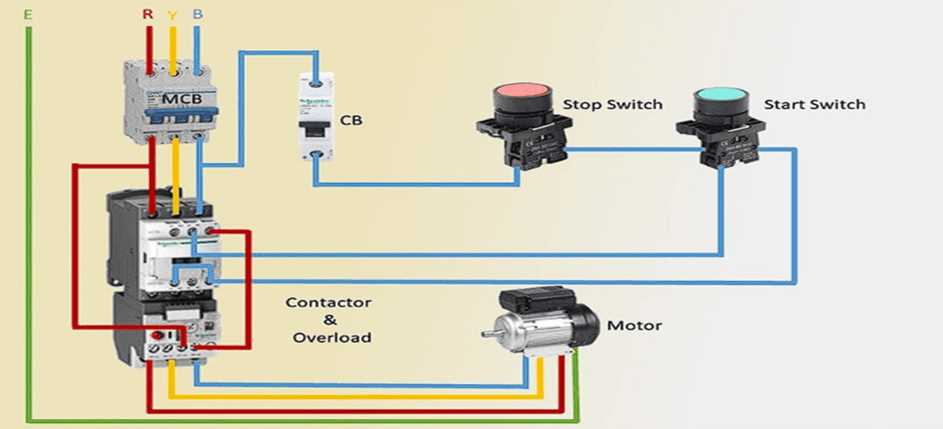
Confusion often occurs when auxiliary blocks are mounted on the sides. These add contacts labeled 13-14, 21-22, or similar pairs used for signaling circuits. They do not carry motor current. Connecting the motor through these small contacts results in welded surfaces or insulation failure. Always separate the three groups visually: upper supply row, lower motor row, and small auxiliary or coil terminals positioned on the front or side of the assembly.