Ensure power is switched off before linking any household safety modules. Identify the live, neutral, and interconnect lines using color codes: black typically carries current, white serves as neutral, and red connects multiple units for synchronized alerts.
Check the module’s base for labeled slots indicating input and output points. Use a small voltage tester to confirm each line’s function before inserting connectors, avoiding accidental short circuits that could damage the system.
When connecting multiple units, maintain consistent polarity across all links. Daisy-chaining several modules requires that each interconnect line shares the same voltage reference to ensure simultaneous alarm triggering without delays or false alerts.
Secure all terminals with screw clamps or push-in slots depending on the unit type. Loose connections can cause intermittent faults, leading to unreliable operation during an emergency.
Smoke Detector Connection and Terminal Guide
Turn off all electrical power before linking any fire safety units. Identify the primary supply lines and interconnect terminals using standard color codes: black for live, white for neutral, and red for linked unit communication. Ensure each line is firmly secured in its corresponding slot.
When installing multiple modules, maintain consistent connections across all units. Daisy-chaining requires that each interlink line shares the same voltage reference to trigger alarms simultaneously. Use a small voltage tester to confirm continuity and avoid reversed polarity that can cause system faults.
Secure all terminals with appropriate clamps or push-in connectors depending on the unit. Verify that each link is stable and that no exposed wires are present. Periodically test the network by activating a single module to ensure the full array responds correctly to alarms.
Identifying Terminals and Their Functions
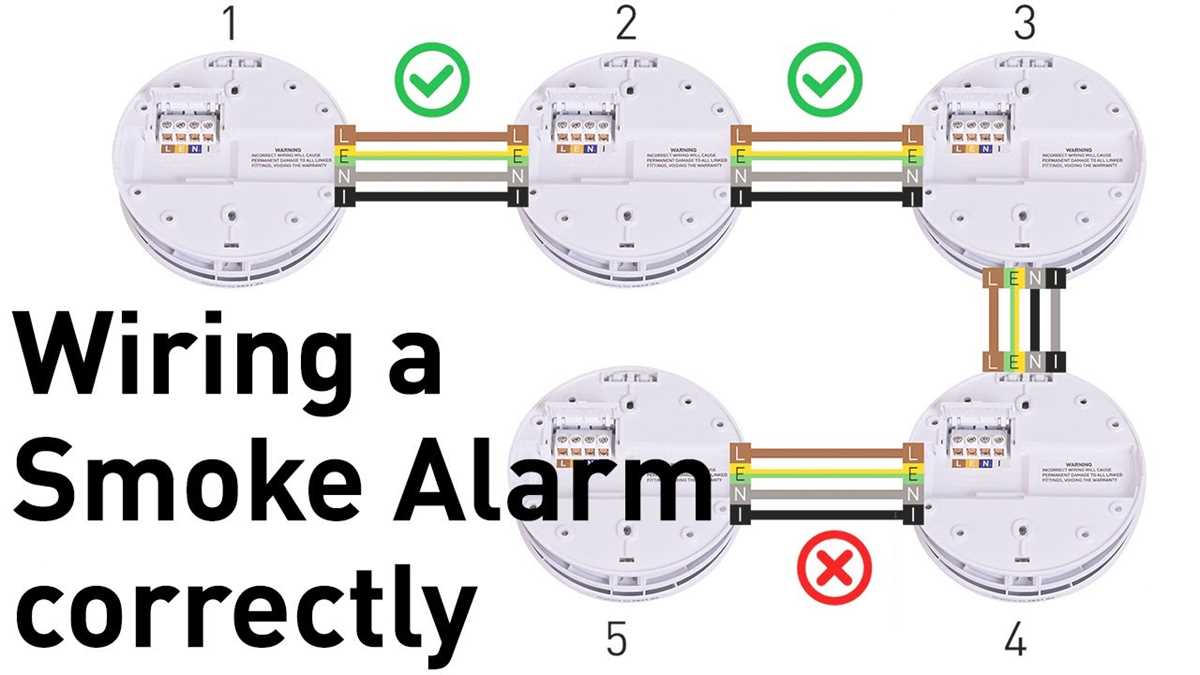
Start by labeling each connection point using the manufacturer’s markings. Standard terminals include the live input, neutral return, and interconnect lines that link multiple units. Correctly identifying these ensures proper signal flow and prevents false alarms.
Check the voltage rating at each terminal before attachment. Live terminals typically carry 120V or 230V depending on your region, while communication lines operate at a lower reference voltage. Use a multimeter to confirm readings and avoid short circuits.
Live and Neutral Lines
Connect the power supply lines first. Black or brown wires usually indicate the live line, while white or blue represents neutral. Firmly attach each wire to its slot and double-check polarity to maintain continuous operation.
Interconnect and Signal Functions
Identify communication terminals used to synchronize multiple units. Red or orange wires often carry the interlink signal. Ensure connections are secure and insulated to prevent signal loss, allowing all linked units to trigger simultaneously when one activates.