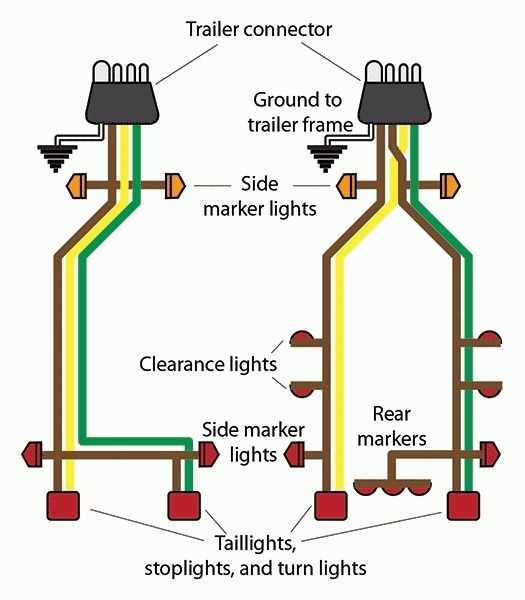
Connect the tail lights and turn signals according to standard color codes to ensure proper signaling on the road. Verify each connection with a test light before securing the plugs to prevent short circuits.
Check all ground connections carefully to maintain stable current flow and prevent flickering or malfunctioning of lights. Clean contact points of rust or paint to improve conductivity.
Label each conductor after verification to simplify future maintenance and avoid confusion when adding auxiliary lighting or replacing components. Keep a record of each terminal assignment.
Test brake light and auxiliary power lines individually before finalizing the harness. Ensure each circuit responds correctly to the vehicle controls and that all fuses are rated appropriately for the connected load.
Inspect the plugs and sockets for corrosion or damage, and apply dielectric grease where necessary to protect against moisture and salt exposure. This prevents failures during towing in wet environments.
Boat Trailer Electrical Connection Layout
Begin by identifying the tail light and turn signal conductors using color codes. Commonly, brown wires serve as tail lights, while green and yellow handle right and left turn signals respectively.
Verify each ground line before connecting the main harness to the frame. Ensure metal contact points are clean and free of corrosion to maintain consistent electrical flow.
Connect brake light circuits individually and test them with a multimeter or test light. This prevents accidental shorting and ensures the braking signal activates reliably during towing.
Run auxiliary power lines separately for added components like winches or trailer-mounted pumps. Fuse each line according to the device rating to avoid overheating and electrical damage.
Secure plugs and sockets with protective covers and dielectric grease to prevent moisture intrusion, especially in saltwater environments. This maintains long-term functionality of all connectors.
Label each conductor after confirming function to simplify troubleshooting and future upgrades. Use numbered tags or colored tape that matches the vehicle’s harness standards.
Test all circuits together after installation, checking that tail lights, turn signals, brake lights, and auxiliary components respond correctly to vehicle inputs. Adjust any loose connections or misrouted lines before finalizing the installation.
Identifying Tail Light and Turn Signal Connections
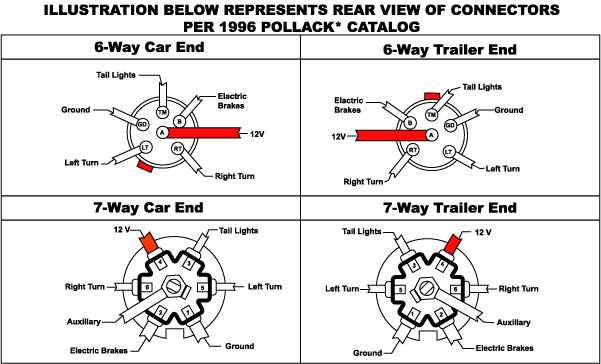
Start by separating the rear light conductors and inspecting their color codes. Brown is typically used for running lights, while yellow and green correspond to left and right turn indicators.
Test each conductor individually using a multimeter or 12V test lamp. Verify that the signal activates correctly when connected to the towing vehicle, ensuring no misrouted or shorted lines.
- Brown wires: Connect directly to tail lamp filaments for constant illumination.
- Yellow wire: Connect to left turn indicator and verify blinking rate.
- Green wire: Connect to right turn indicator and confirm proper operation.
- White wire: Attach to grounding points on the frame to complete circuits.
Secure all connectors with dielectric grease to prevent corrosion and ensure stable contact. Use insulated terminals and cover plugs to protect from moisture and salt exposure.
Label each connection clearly after testing. Maintaining accurate identification simplifies future troubleshooting and reduces the risk of accidental misconnection when adding additional lights or accessories.