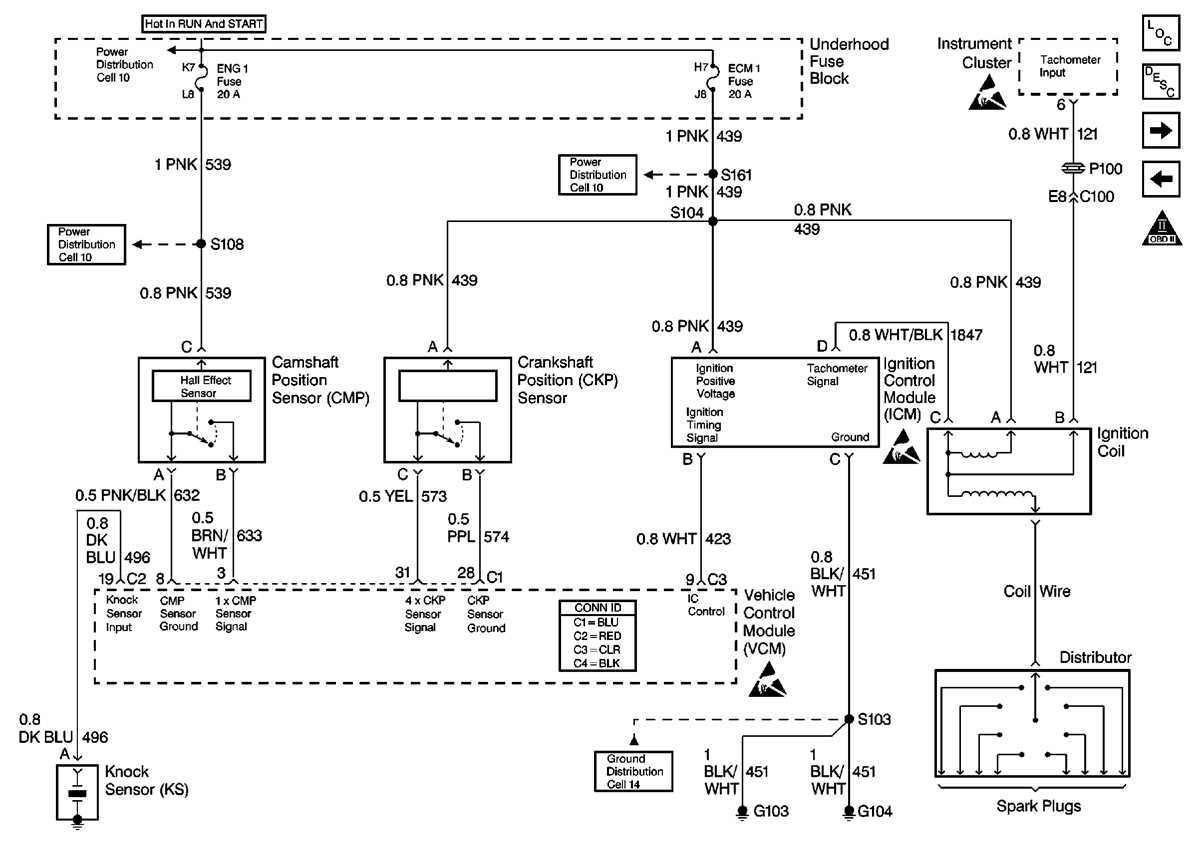
Check the three main conductors between the engine position pickup and the control module before diagnosing timing faults. A typical connector includes a 5V reference line from the ECU, a ground return, and a signal output that carries a pulsed voltage used for valve timing synchronization.
The position pickup mounted near the intake or exhaust cam gear generates a square-wave or digital pulse as the rotating target wheel passes its magnetic or Hall element. With ignition on, measure the supply line using a multimeter. Most vehicles deliver 4.8–5.2 volts. If this voltage is missing, inspect the harness path between the control unit and the connector.
The signal line normally switches between 0V and about 5V while the engine rotates. During cranking, an oscilloscope or scan tool can display this pulse pattern. A stable waveform confirms correct alignment of the pickup, target wheel, and electrical connection. Irregular pulses or a flat line usually indicate broken conductors, connector corrosion, or a failed pickup element.
Keep the cable path away from ignition coils and high current lines. Electrical noise can distort the timing signal. Twisted pair routing and proper shielding reduce interference and help the control unit maintain accurate valve timing and fuel injection sequencing.
Camshaft Sensor Wiring Diagram with Pin Layout Signal Path and ECU Connection
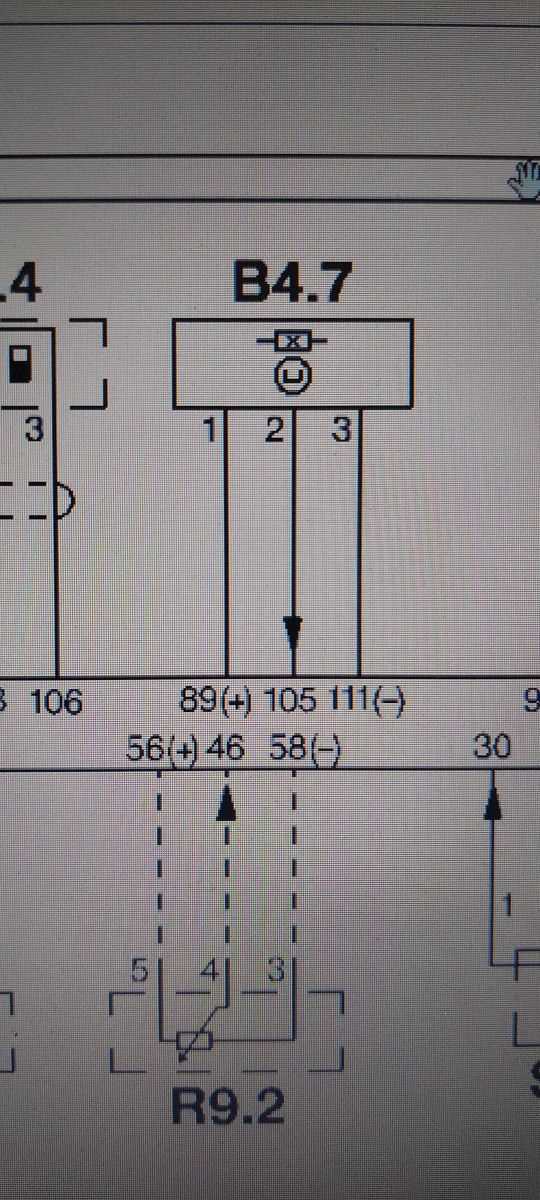
Identify the three-pin connector at the valve timing position pickup before tracing electrical paths. Most vehicles use the same layout: one conductor carries a 5V reference from the engine control unit, the second provides ground, and the third transmits a pulsed signal generated by the Hall element as the rotating trigger wheel passes the pickup.
Check the supply conductor with ignition switched on. A stable reading between 4.8V and 5.2V indicates that the ECU output stage and harness route are intact. The ground conductor should show less than 0.1 ohm resistance when measured against engine block ground. Higher resistance usually points to corrosion inside the connector or a damaged harness section.
The signal path carries a square-wave pattern used by the control unit to track valve timing relative to crank rotation. During engine cranking the line normally toggles between 0V and approximately 5V. A digital oscilloscope reveals evenly spaced pulses; missing or distorted pulses often indicate a misaligned trigger wheel, broken conductor, or contamination on the pickup face.
Route the harness away from ignition coils and alternator output leads. High electromagnetic noise may distort the timing pulse and cause unstable ignition timing or injection sequencing. Secure the cable with clips along the cylinder head and maintain tight connector contact to keep the ECU receiving a stable position signal.
Camshaft Sensor Pin Identification Power Ground and Signal Lines
Locate the three-terminal connector at the valve timing pickup mounted near the cylinder head and verify each contact before electrical testing. Most automotive engines use a simple layout where one terminal carries ECU supply voltage, one provides ground return, and the third transmits a digital pulse used for valve timing synchronization.
Typical Terminal Functions
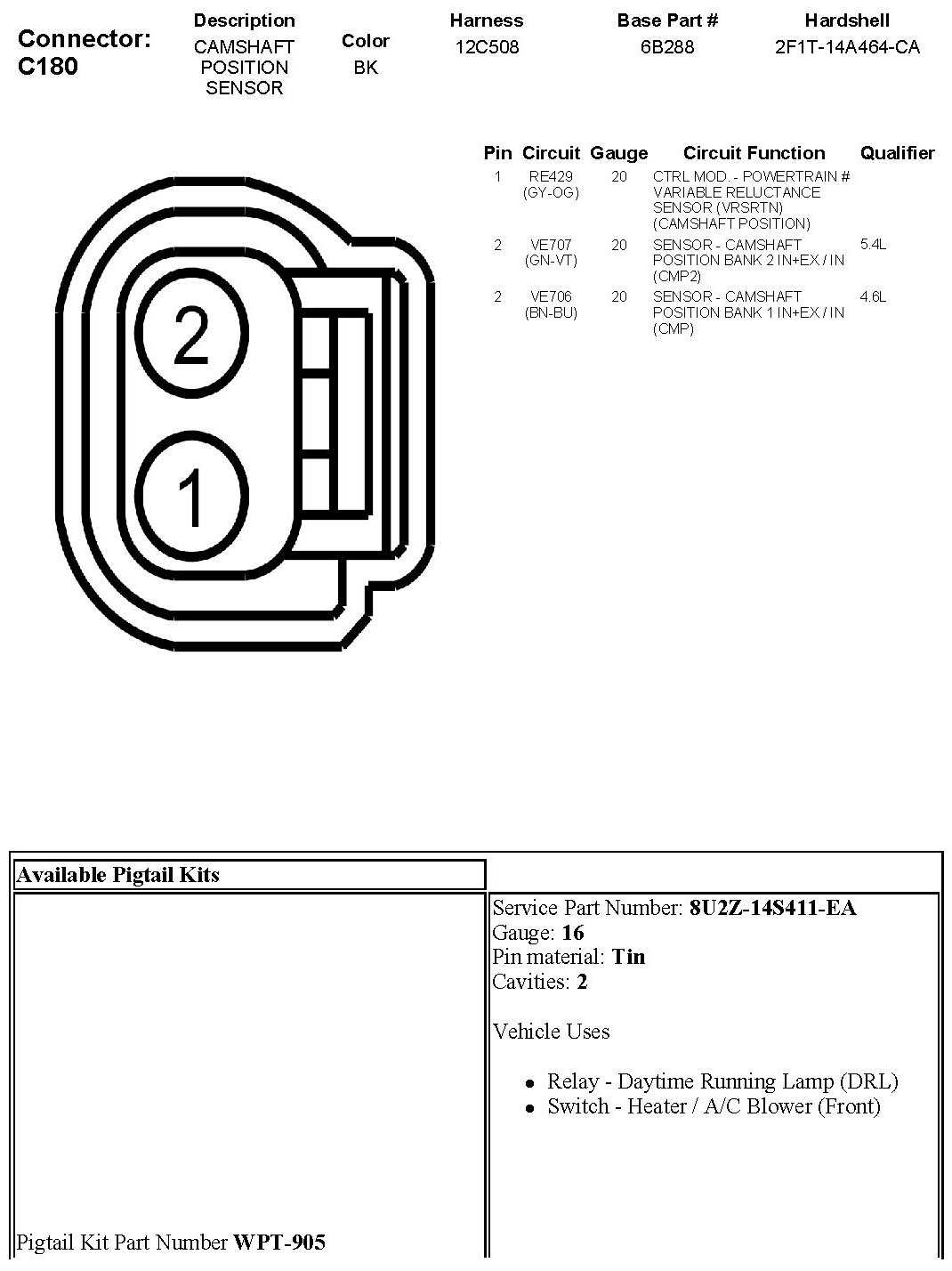
The connector normally contains three clearly defined conductors:
- Power supply line from the engine control unit
- Ground return connected to ECU ground network
- Signal output delivering pulse data to the control module
Measure the supply conductor using a multimeter with ignition switched on. Most engines provide about 5 volts. Some older designs may show 8–12 volts depending on the control unit architecture. If voltage is missing, inspect the harness route from the ECU connector to the pickup plug.
The ground terminal should show minimal resistance relative to engine block ground. A reading below 0.1 ohm indicates a clean return path. Higher resistance often appears when moisture enters the connector or when ground points near the intake manifold become loose.
Signal Line Characteristics
The output conductor carries a digital pulse created by a Hall-effect pickup or magnetic trigger. During engine cranking the line switches between approximately 0V and 5V. An oscilloscope connected between signal and ground reveals evenly spaced pulses corresponding to rotation of the cam gear trigger wheel.
Common color coding varies by manufacturer but frequently follows patterns such as:
- Red or pink for ECU voltage supply
- Black or brown for ground
- Yellow, blue, or green for signal output
Confirm terminal order before reconnecting the harness. Incorrect placement can prevent the ECU from receiving timing pulses and may stop ignition and fuel injection events.