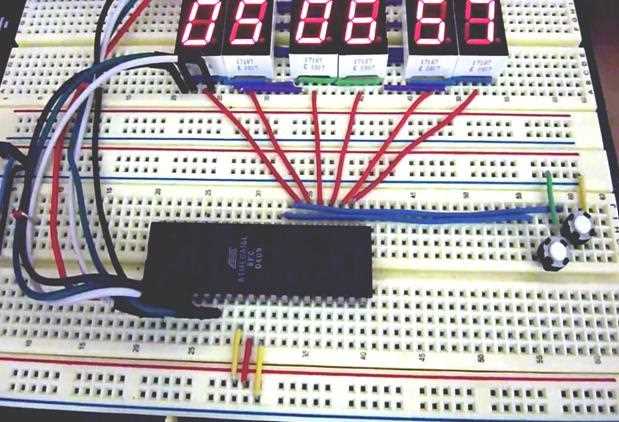
To construct an accurate time system using LED indicators, start by gathering a few core components. These include LEDs arranged in a format that can represent each number, a microcontroller, and a timing module. Choose high-quality LEDs for visibility and durability. The microcontroller will serve as the brain, controlling the timing sequence and managing inputs. The time module, typically a real-time clock (RTC) chip, ensures precision in keeping track of time.
Next, wire the components in a way that allows each number to be shown properly on the LED array. You need to ensure that the connections between the microcontroller, the time module, and the LEDs are secure and correctly routed. This can involve using resistors to limit the current to each LED segment and transistors to manage the current flow effectively.
Finally, program the microcontroller to read the time from the RTC chip and display it on the LEDs. The code should be simple yet effective, ensuring accurate updates and efficient handling of the timing system. You can create a loop that reads the RTC data every second and updates the corresponding LED segments to reflect the current time in hours, minutes, and seconds.
7 Segment Display Digital Clock Circuit Guide
Start by gathering the key components: LEDs, microcontroller, real-time clock module, resistors, and transistors. The LEDs will show the time in numeric format, while the microcontroller will control the time flow. Choose an RTC module with accurate timekeeping capabilities for reliable operation.
For the LED array, a common choice is a 7-segment configuration where each segment corresponds to a part of a digit. Connect each segment to an I/O pin of the microcontroller, ensuring that the power and ground pins are connected properly. Use current-limiting resistors between each LED and the microcontroller to avoid damaging components.
The microcontroller will serve as the brain of the system, reading time from the RTC module and controlling the display. Program it to read the time and convert it into a numeric format suitable for output on the LEDs. If using a microcontroller like Arduino, you can use libraries that simplify interfacing with the RTC module.
The RTC module should be wired to the microcontroller using I2C or SPI, depending on the model. I2C is typically preferred for ease of use and fewer wiring connections. Ensure that the SDA and SCL pins are properly connected, and provide power and ground connections to the module. This module will maintain accurate time even when the system is powered off, thanks to its built-in battery backup.
Programming the Microcontroller
Write the code to initialize the RTC and read the time values periodically. The most common format includes hours, minutes, and seconds. Once the values are retrieved, the microcontroller will send the correct signals to the LED segments, turning on the corresponding LEDs to form each digit.
Use a delay function in the code to update the display every second. This ensures the time is refreshed in real-time. Depending on your design, you may also want to add features like a 12-hour/24-hour format or blinking for the seconds digit.
Powering the System
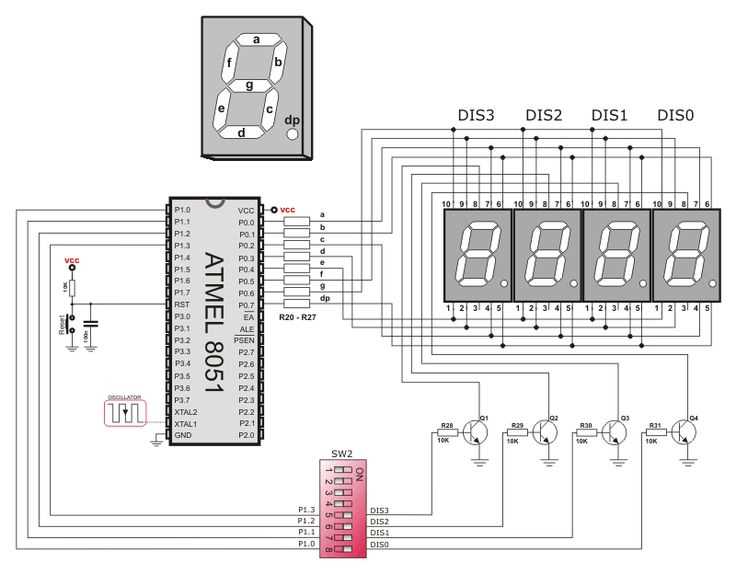
Power the entire system using a 5V or 12V power source, depending on your components’ voltage requirements. If using a microcontroller like Arduino, ensure it has a stable supply of power, typically from USB or a dedicated power adapter. Also, consider using capacitors to filter out any noise or spikes in power, ensuring a stable operation of the RTC and microcontroller.
Finally, test the system by ensuring the LED array shows the correct time. Check that the microcontroller reads the time correctly from the RTC and that the LEDs update properly every second. Troubleshoot the connections and code if any issues arise, ensuring all components are functioning as expected.
Understanding the Components for Building a Digital Clock
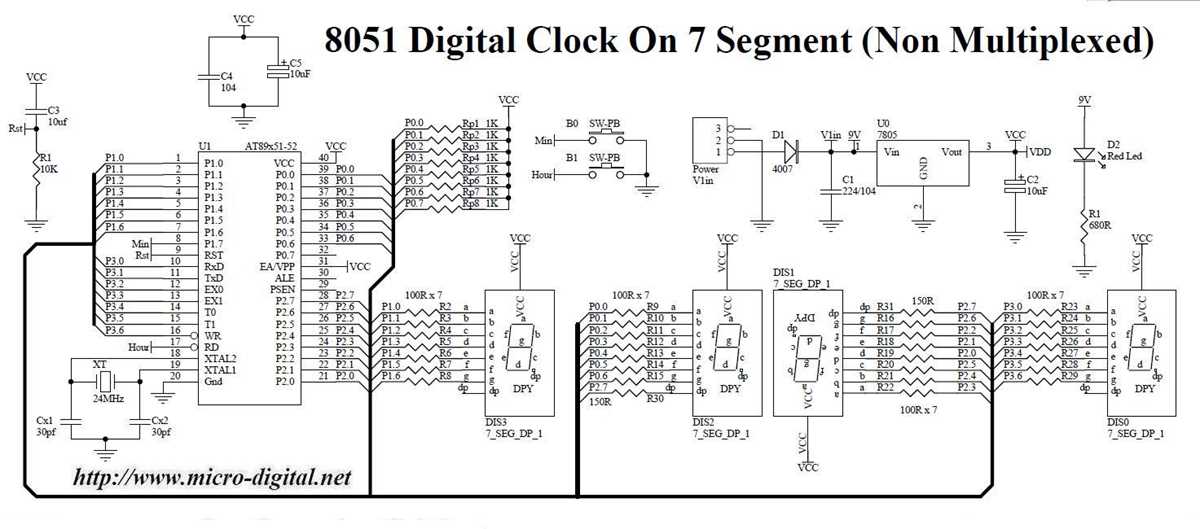
The main components for creating a time-keeping system include a real-time clock (RTC) module, a microcontroller, LEDs, and resistors. The RTC module is crucial as it keeps accurate time even when the system is powered off, thanks to its integrated battery backup. The microcontroller controls the time logic, processes the data from the RTC, and drives the LEDs to show the correct values. Make sure to choose a compatible RTC that communicates with the microcontroller, typically via I2C or SPI.
Microcontroller and Power Supply
The microcontroller serves as the brain of the system, interpreting time data from the RTC and sending output signals to the LEDs. Common microcontrollers like Arduino or ESP32 are often used due to their simplicity and compatibility with RTC modules. A steady power supply, typically 5V or 12V, is necessary for the microcontroller and RTC to function correctly. Ensure that the power source is stable to avoid interruptions in the time-keeping process.
LEDs and Resistors
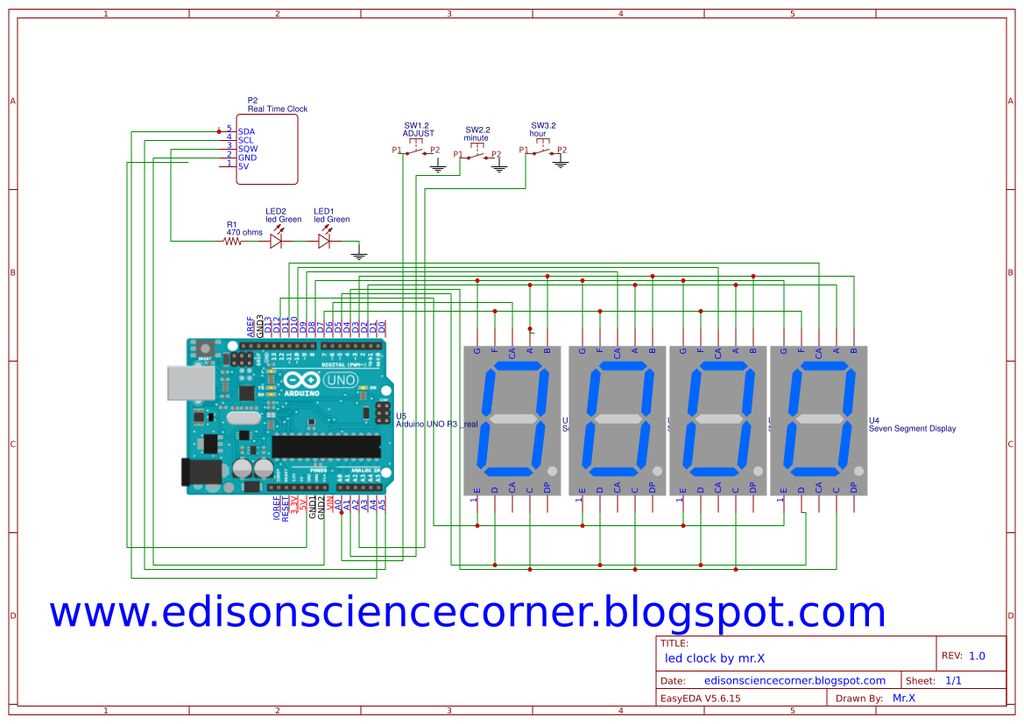
Each number in the time output is shown using LEDs arranged in a seven-segment format. These LEDs require current-limiting resistors to prevent damage from excessive current. Calculate the appropriate resistance based on the forward voltage and current rating of the LEDs. Common values range between 220Ω to 1kΩ depending on the LED type. This ensures the system operates safely and the time is displayed clearly.