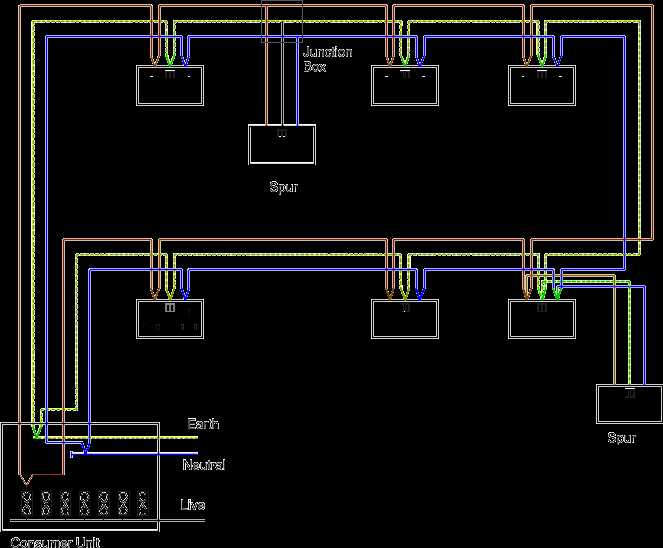
Locate the main distribution panel first and trace every branch leaving the breakers. A typical residential power layout uses 120 V or 230 V supply lines that split into lighting runs and outlet branches. Breaker ratings must match cable capacity; 15 A protection usually pairs with 14 AWG conductors, while 20 A lines require 12 AWG copper.
Follow the path of the live conductor from the service panel through protection devices toward loads such as lamps and receptacles. Neutral conductors return current to the distribution board through a shared bus bar. Ground conductors connect metal enclosures and outlet frames to prevent dangerous voltage buildup during insulation failure.
Lighting branches typically route power through wall-mounted toggles placed along the phase line. When the control closes, voltage reaches the lamp holder while the neutral path remains continuous. This arrangement keeps lamp sockets de-energized when the control is open, which reduces shock risk during bulb replacement.
Outlet branches distribute power across rooms using parallel connections. Each receptacle receives phase, neutral, and ground conductors through junction boxes or direct cable runs. Load planning keeps each branch below 80 percent of breaker capacity, meaning a 20 A line should not exceed about 16 A during continuous appliance use.
Use clearly labeled layouts showing breaker numbers, conductor colors, and cable paths between the service panel, lighting fixtures, and receptacles. Such visual references allow quick identification of overloaded branches, loose terminals, or missing ground connections during maintenance or renovation.
House Wiring Circuit Diagram Showing Breaker Panel Lighting and Outlet Connections
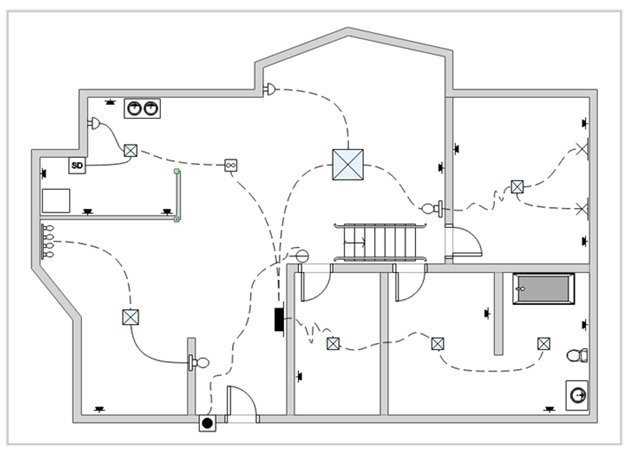
Trace each branch leaving the distribution panel and label the breaker number connected to it. Lighting runs usually connect to 10–16 A protection devices, while receptacle lines often use 16–20 A breakers depending on regional electrical standards. Mapping these paths allows quick identification of which breaker controls each room.
Route the phase conductor from the breaker output toward junction boxes placed in ceilings or wall cavities. From these junction points, the line splits toward lamp holders or wall outlets. Neutral conductors return directly to the neutral bus bar inside the distribution panel. Ground conductors connect every metal enclosure and outlet frame to the grounding bar.
Lighting branches typically follow a simple path: breaker → junction box → wall control → lamp holder. The phase conductor passes through the wall control so the fixture receives voltage only when the toggle closes. Neutral lines bypass the control and connect directly to the lamp socket.
Outlet branches distribute power using parallel connections. Each receptacle receives three conductors: phase, neutral, and ground. This arrangement allows every outlet to receive full supply voltage regardless of how many devices operate on the same branch.
Typical conductor sizes depend on load rating. Many residential installations use:
14 AWG copper for 15 A lighting runs
12 AWG copper for 20 A outlet branches
10 AWG copper for heavy loads such as electric heaters or large appliances
Keep total continuous load below about 80 percent of breaker rating. For example, a 20 A branch should carry no more than roughly 16 A during long operation. This margin prevents overheating in cables hidden behind drywall or ceiling panels.
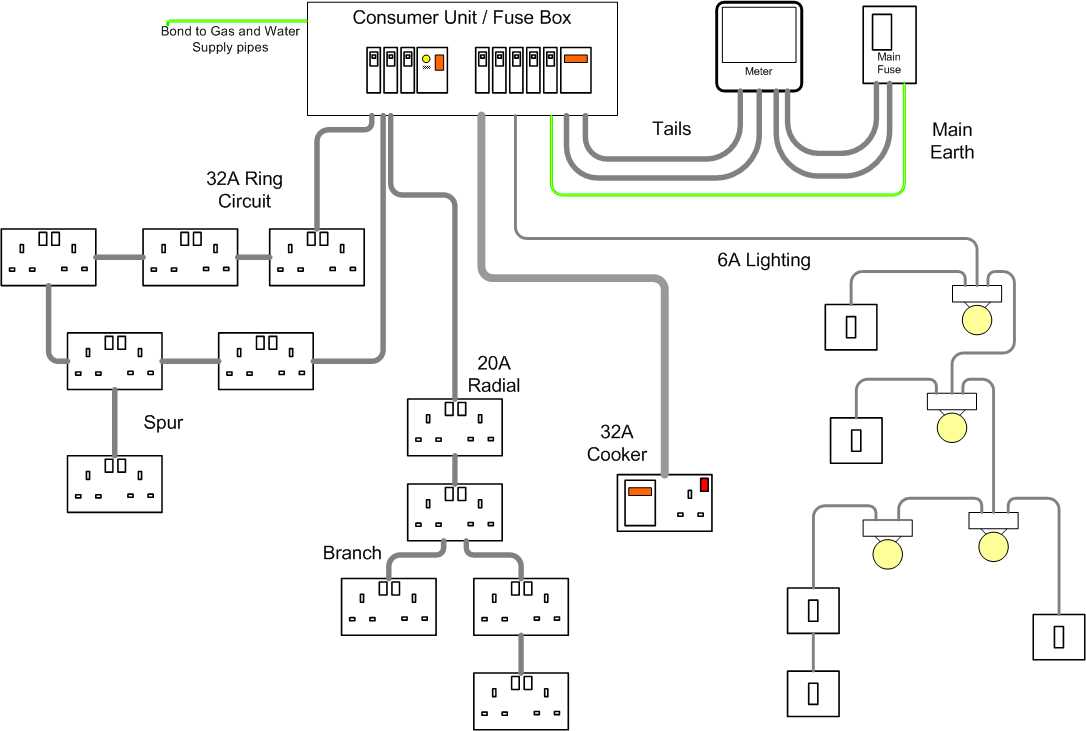
Label junction boxes, outlets, and lighting fixtures according to breaker numbers inside the distribution panel. Such labeling allows quick troubleshooting when a branch loses power, and it also reduces confusion during future renovation or electrical inspection.
Main Distribution Panel Connections for Residential Power Circuits
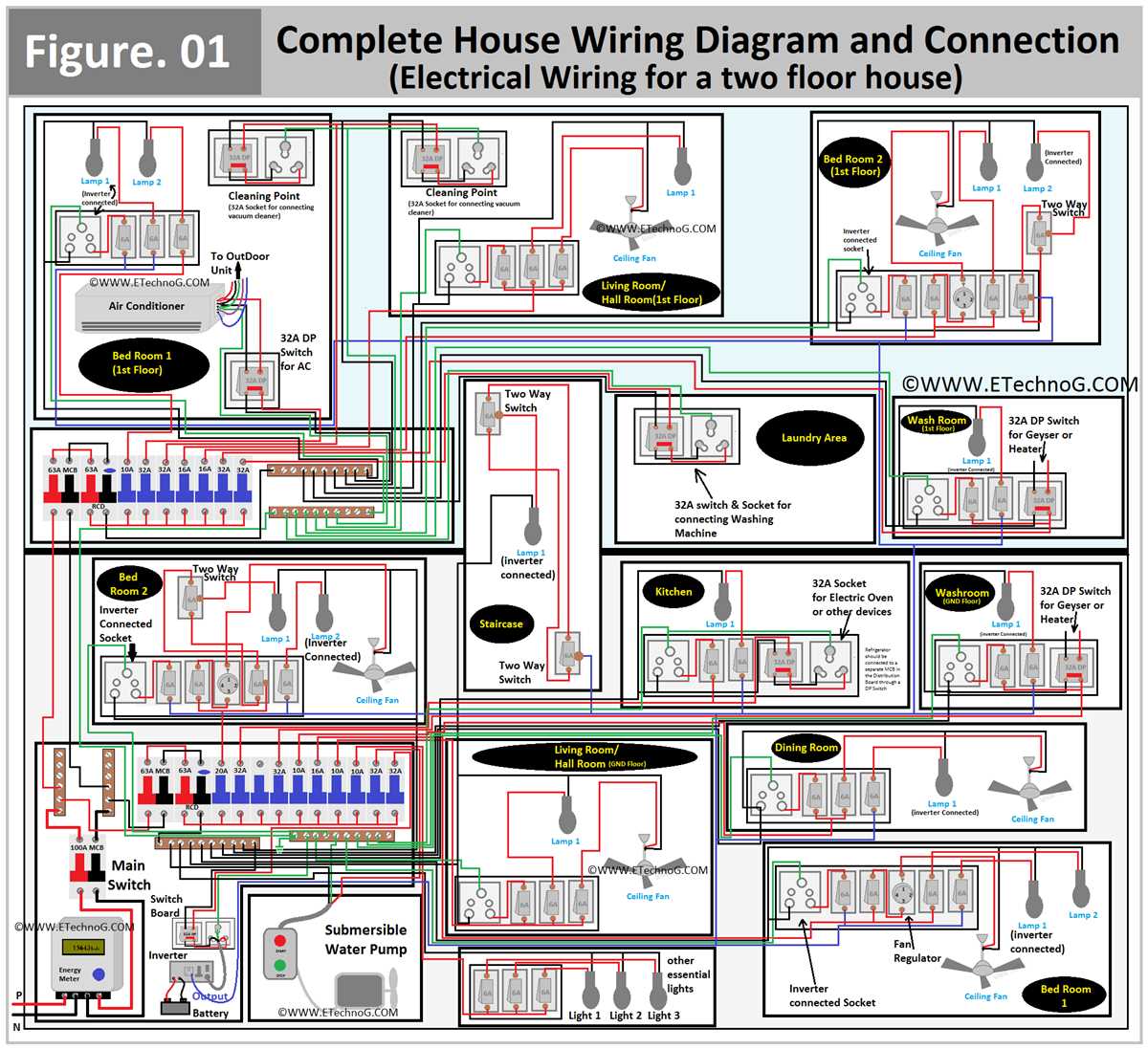
Connect the main service lines directly to the input terminals rated for the total amperage of the installation. Use appropriately sized copper or aluminum conductors and secure them with the specified torque to prevent overheating or loose contacts.
Bond the neutral bus to the grounding bar and attach the grounding electrode conductor. This ensures proper fault current paths and stabilizes voltage across all downstream feeders, minimizing electrical shock and equipment damage risks.
Install individual breakers for each load group, labeling them with their respective areas or appliances. Segregating high-demand devices such as ovens or HVAC units prevents overloads and allows selective disconnection without affecting other sections of the residence.
Route all conductors neatly within the panel, keeping separation between power lines and control or low-voltage connections. Confirm all terminations are tight, insulation is intact, and protective covers are in place to avoid arcing, shorts, or accidental contact during maintenance.