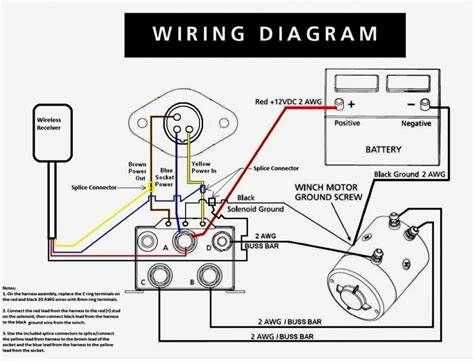
Connect the handheld or dash-mounted control to the contactor module using three low-current conductors: a common feed, an “in” command lead, and an “out” command lead. The common line usually carries +12 V from the vehicle battery through a 5–10 A fuse. Pressing the control in one direction sends voltage to the first control terminal on the solenoid pack, while the opposite direction energizes the second terminal. Verify polarity with a multimeter before attaching connectors; many control harnesses use red for supply and two lighter colors such as green and black for direction signals.
The lifting motor itself connects to the contactor block with two thick cables rated for 200–500 A surge current. Copper conductors with 25–35 mm² cross-section handle most 4×4 recovery units rated between 9,000 and 12,000 lb. Route these leads away from exhaust components and sharp edges. A short ground strap between battery negative and the metal frame near the drum drive reduces voltage drop during heavy pulls.
Control units mounted on handlebars or dashboards normally contain a momentary rocker or push pad with spring return. Each press routes the fused supply toward one of the control posts on the solenoid cluster. When the signal arrives, the internal relay pair reverses motor polarity, which determines cable movement direction. If the drum rotates opposite to the command, swap the two thick motor leads at the contactor block.
Check illumination and accessory feeds separately. Some remote pads include a small backlight tied to the vehicle lighting harness. This thin conductor carries only a few hundred milliamps and should join the instrument lamp line rather than the battery supply used for the lifting motor.
Before the first pull test, measure voltage at the contactor input studs while the engine runs. Values below 11.5 V under load point to poor grounding, undersized cables, or corroded lugs. Tight mechanical fastening of ring terminals with stainless M6 or M8 bolts keeps resistance low and prevents heat buildup during repeated recovery operations.
Winch Switch Wiring Diagram With Control Relay Battery and Motor Connections
Route the control pad leads to the contactor pack using three low-current conductors. One line carries +12 V supply through a 5–10 A fuse, while the remaining two send direction commands. Each press of the control sends voltage to one coil terminal of the relay block. This action energizes internal contacts that direct high current from the battery toward the drum drive motor.
Connect the power system using thick copper cables rated for heavy load. Typical off-road recovery units rated between 9,000 and 12,000 lb draw 250–450 A during pull.
- Battery positive → large input stud on the contactor pack
- Battery negative → chassis ground and motor housing
- First motor terminal → output stud A on the contactor block
- Second motor terminal → output stud B on the contactor block
The contactor module reverses motor polarity depending on which control line receives voltage. When the first signal line becomes live, internal contacts route current so the drum rotates inward. When the second signal line receives voltage, polarity flips and the drum rotates outward.
Control Relay Connection Points
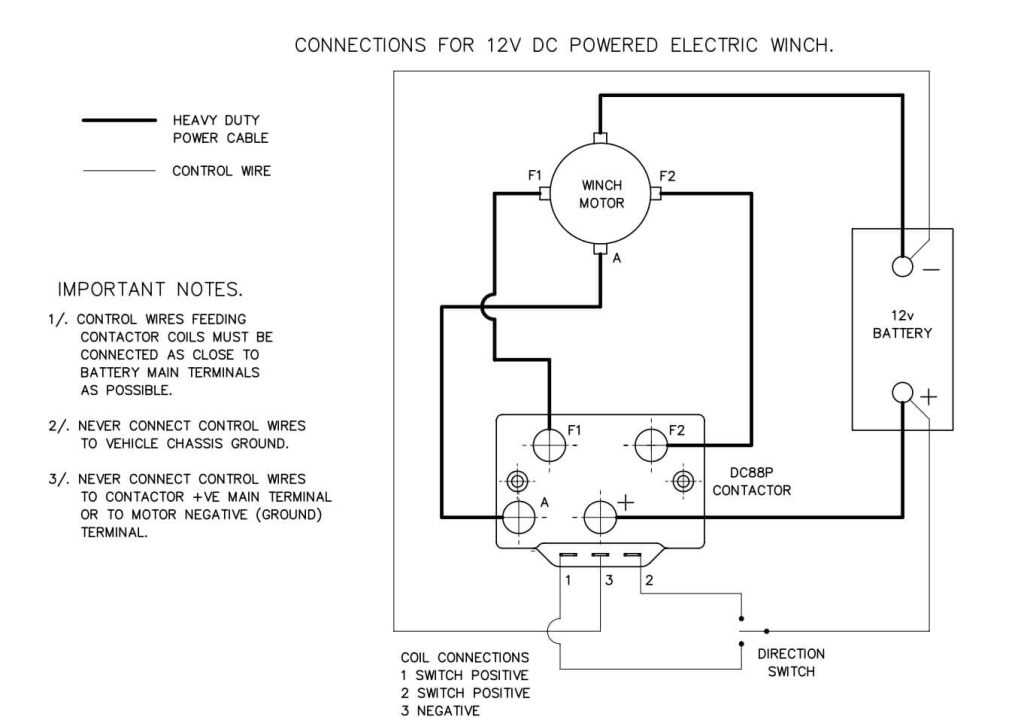
Most solenoid packs include small spade terminals or threaded posts for the control pad. Identify them before connecting leads.
- Common input terminal connected to fused +12 V
- Control line for inward drum rotation
- Control line for outward drum rotation
- Ground terminal used by illuminated control pads
Use ring terminals crimped with a ratcheting crimper and tighten mounting hardware firmly. Poor contact between cable lug and stud causes heat buildup during long pulls. After installation, measure voltage across the motor posts during operation; a drop greater than 1 V between battery and motor indicates resistance in cables, terminals, or ground points.
Winch Switch Terminal Identification for Power Control and Direction Input
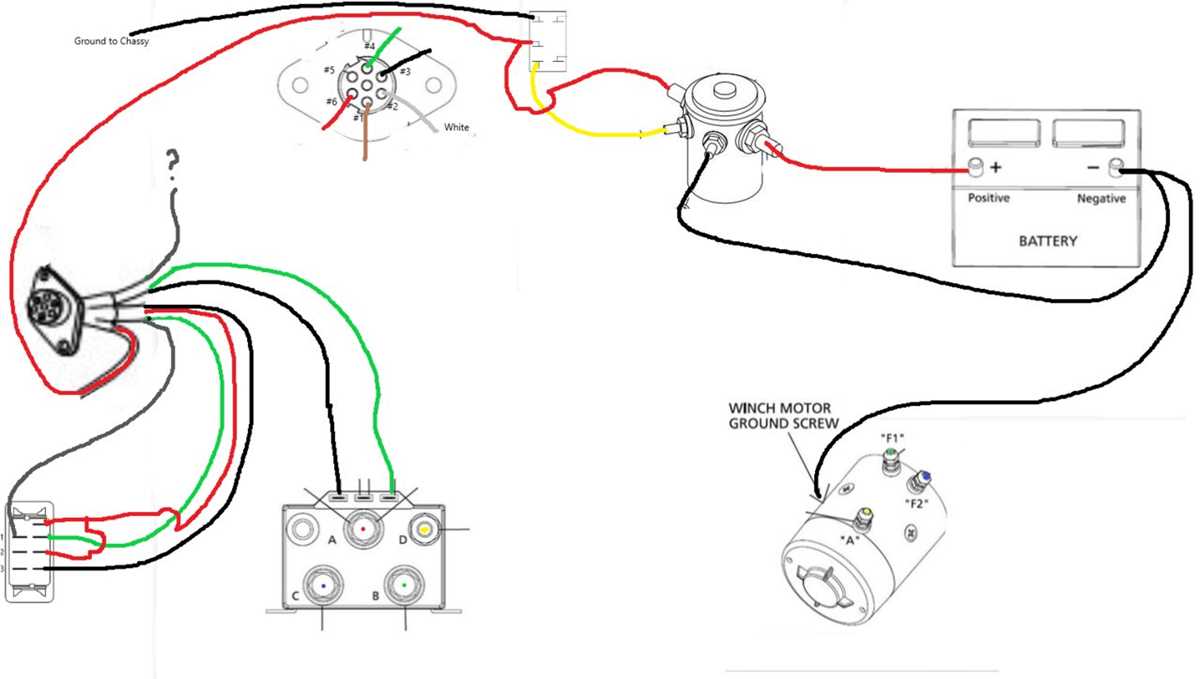
Identify the common supply terminal first. This contact usually receives +12 V from the battery through a small inline fuse rated between 5 and 10 A. A red conductor often carries this feed. Confirm voltage with a multimeter before attaching the control harness, because reversing supply and signal leads can prevent the relay pack from activating.
Locate the two direction command terminals positioned beside the supply post. These contacts transmit short control pulses toward the relay assembly. One terminal activates inward drum rotation while the second triggers outward movement. Pressing the handheld or dash-mounted controller routes the supply line to one of these outputs. The relay module then changes motor polarity through heavy current contacts.
Many control pads include a fourth terminal linked to ground. This connection supports backlighting or indicator lamps built into the control housing. Attach the ground conductor to the vehicle chassis using a clean metal surface and a stainless bolt. Resistance above 0.2 ohm at this point can cause weak illumination or unstable control signals.
Check conductor colors used by common recovery control harnesses: red for supply, green for inward command, black or blue for outward command, and white or brown for ground used by lighting. Cable thickness for these low-current lines typically ranges from 0.5 to 0.75 mm² because current rarely exceeds 0.5 A.
After attaching all terminals, test operation with the engine running. Measure voltage between the supply terminal and chassis ground while pressing each control direction. The reading should remain within 11.5–14 V. Lower values indicate poor battery connections, oxidized terminals, or loose crimped lugs along the control harness.