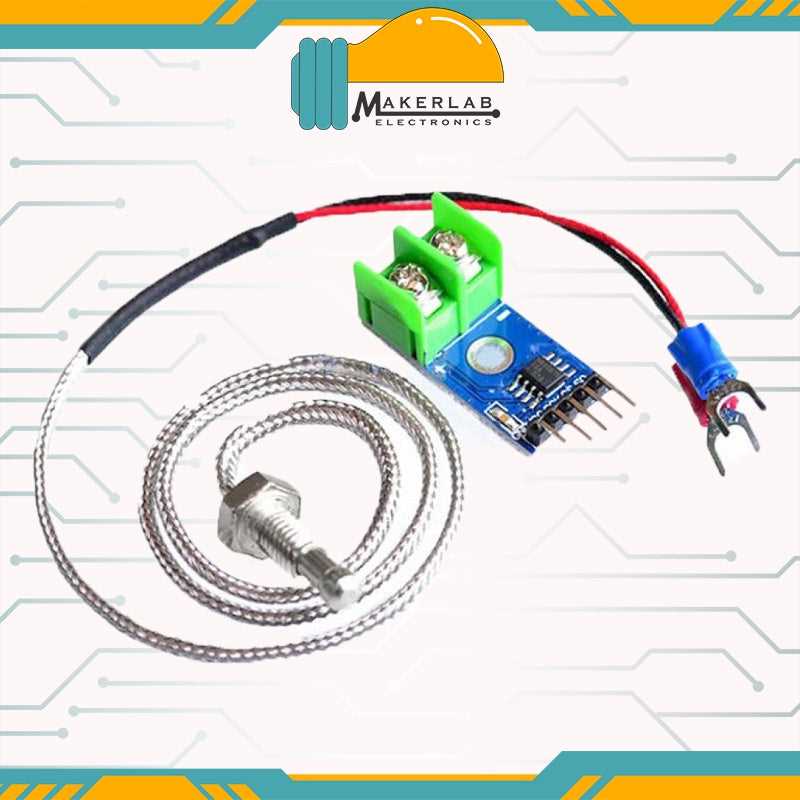
Use a chromel–alumel temperature probe with a low-noise measurement layout that includes differential amplification and reference junction compensation. Such sensors generate about 41 µV per °C near room temperature, which means even small wiring mistakes or electrical noise can distort readings. A stable layout with short leads, shielded cable, and proper polarity marking prevents signal inversion and measurement drift.
The sensing element works through a junction formed by nickel-chromium and nickel-aluminum alloys. When the probe tip experiences heat, a tiny voltage appears between the metal leads. Typical measurement ranges extend from −200 °C up to about 1260 °C. Because the generated voltage is extremely small, the measurement path normally includes an instrumentation amplifier with high input impedance and microvolt resolution.
Accurate temperature reading requires compensation for the reference junction placed at the connector or measurement board. A dedicated compensation IC or a precision temperature sensor near the terminal block corrects the offset produced by ambient conditions. Many practical layouts route the signal into a 24-bit ADC or a specialized interface chip, which converts microvolt signals into digital data suitable for controllers, data loggers, or industrial monitoring equipment.
Practical wiring layouts also address shielding and grounding. Twisted extension leads made from matching alloys reduce interference and maintain correct voltage generation across long distances. For installations exceeding 10–20 meters, differential routing and proper grounding at a single point help avoid measurement instability caused by electromagnetic noise from heaters, motors, or switching power supplies.
K Type Thermocouple Circuit Diagram Wiring Polarity Amplifier Connection and Signal Reading
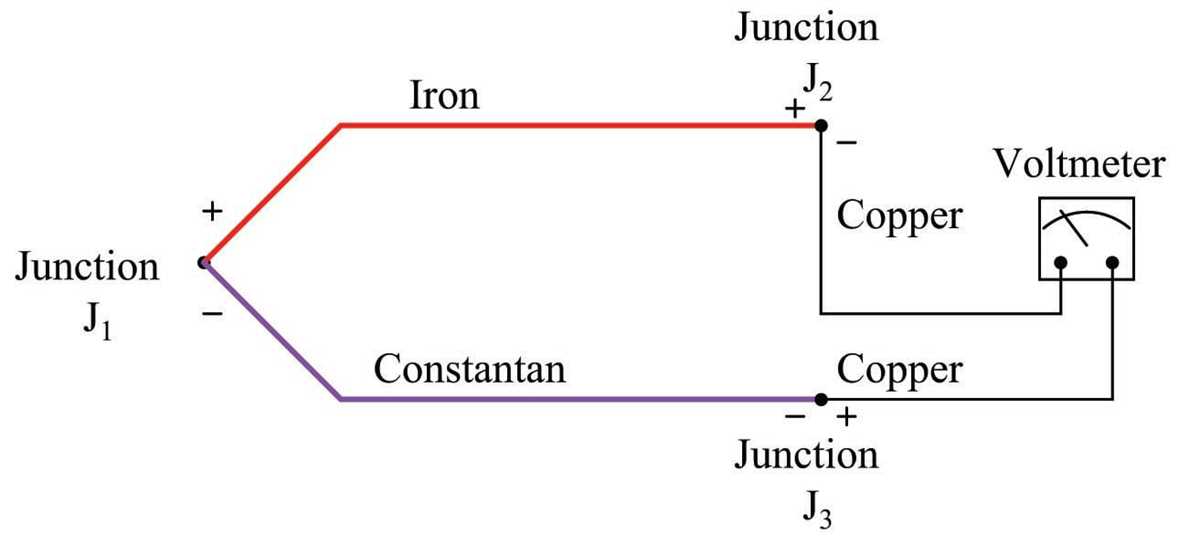
Connect the chromel lead to the positive input of the measurement stage and the alumel lead to the negative input. Reversed polarity produces inverted voltage and incorrect temperature calculation. In standard industrial color marking the chromel conductor is yellow and the alumel conductor is red. Direct junction output near 25 °C is roughly 1.0 mV at 25 °C difference and increases about 41 µV per °C, which requires precise signal handling.
A direct connection to a microcontroller analog input rarely works because the generated voltage is extremely small. Insert a differential amplification stage with high input impedance above 1 MΩ. Gain values between 100 and 500 are typical for measurement ranges below 500 °C. Popular solutions use instrumentation amplifiers such as AD620, INA128, or MAX31855 interface devices that convert microvolt signals into readable levels.
Recommended wiring layout
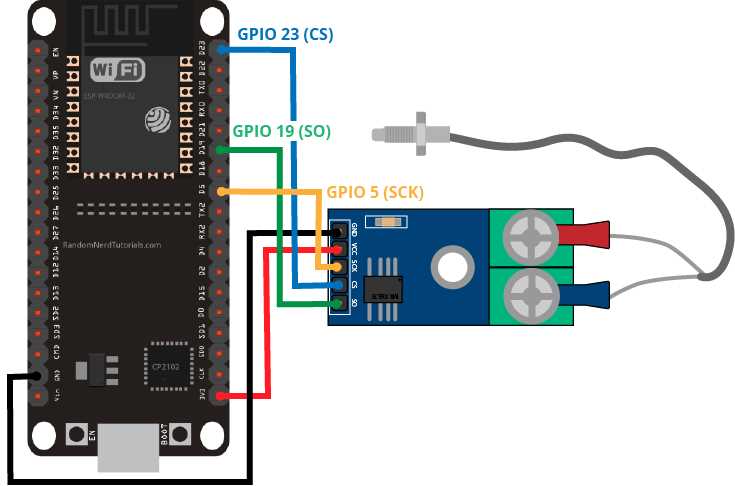
- Use matching extension wire made from the same alloy pair
- Keep sensor leads twisted along the entire run
- Limit connector transitions to reduce parasitic junctions
- Place the amplifier within 20–50 cm of the probe connection
- Ground shielding at one point only to prevent ground loops
The amplification stage usually feeds an analog-to-digital converter with resolution of 16 to 24 bits. At a gain of 200, a 1 mV sensor signal becomes 200 mV, which fits safely inside common ADC ranges such as 0–2.5 V or ±1.25 V. Differential ADC inputs help reject interference produced by heaters, switching supplies, or industrial drives located near the measurement equipment.
Signal reading and temperature conversion
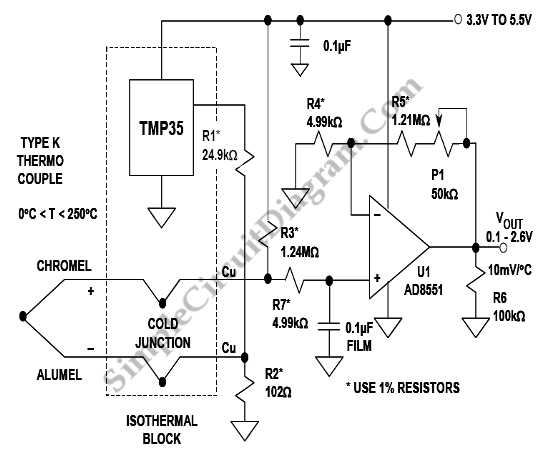
- Measure amplified voltage at the ADC input
- Apply reference junction correction using a local temperature sensor
- Convert voltage to temperature using standard polynomial tables
- Filter noise with a moving average over 5–20 samples
Reference junction compensation is performed with a digital temperature sensor mounted near the terminal block. Devices such as LM35, TMP36, or integrated converter chips measure board temperature and correct the sensor output mathematically. Without this correction, readings may drift by several degrees because the reference junction temperature directly alters generated voltage.
Long cable installations require additional protection against electromagnetic interference. Runs exceeding 10 m benefit from shielded twisted pair conductors and low-pass filtering near the amplifier input. A simple RC filter with 100 Ω series resistance and 10 nF capacitor reduces high-frequency noise while preserving slow thermal response characteristics of the probe.