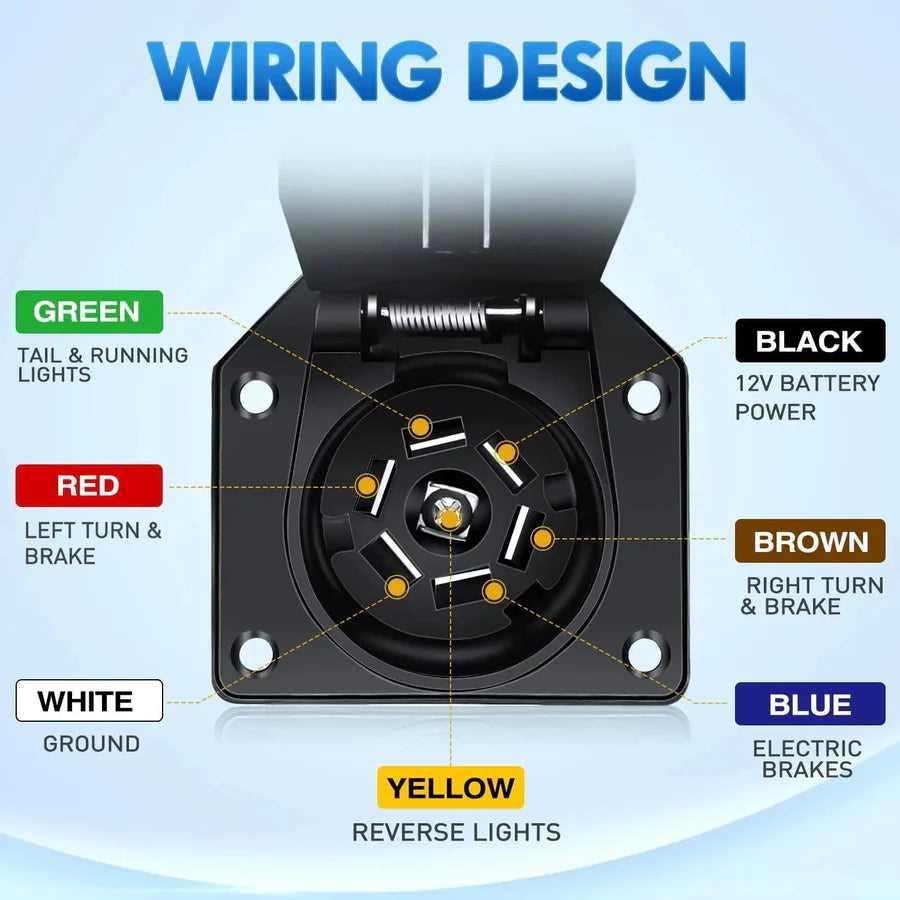
Check each cable before connecting to prevent shorts and ensure correct signal flow. White is typically used for ground, yellow for left indicators, and green for right indicators. Confirm these assignments with a multimeter before attaching any terminals.
Use color-coded insulation to match each wire with its corresponding socket. Brown usually handles tail lights, blue manages brakes, and red supplies auxiliary power. Secure each pin firmly to maintain contact under vibration.
After connections, test all circuits individually using a 12-volt tester. Ensure brake signals activate lights and that running lights remain stable. Address loose connections immediately to prevent electrical failures during towing.
7 Pin Electrical Plug Setup
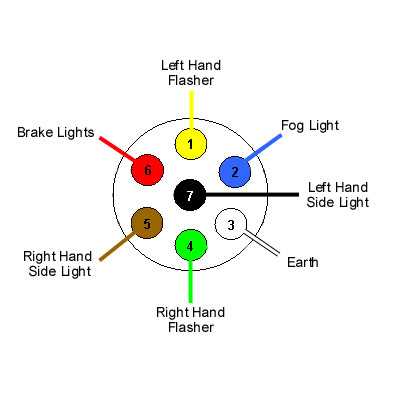
Start by identifying each wire by color before attaching it to the plug. White is generally ground, green handles right turn signals, and yellow handles left turn signals. Verify these functions with a multimeter to avoid shorts.
Secure each pin in its slot using a small screwdriver or crimping tool. Loose terminals can cause flickering lights or intermittent power loss. Check for snug fit before closing the housing.
Use dielectric grease on contacts to prevent corrosion. Exposure to moisture can degrade metal connections quickly, causing erratic signals. Apply a thin layer on each pin before assembly.
Route the cable along existing chassis lines and avoid sharp bends. Excess tension can pull wires out of sockets, while tight curves may damage insulation. Clip the cable every few inches for stability.
Test each circuit individually after installation. Brake lights, indicators, and auxiliary power should operate correctly. Use a 12-volt tester to confirm continuity and correct polarity before towing.
Inspect connections periodically, especially after rough terrain use. Vibration can loosen terminals over time. Recheck pin tightness and clean contacts to maintain reliable performance throughout the season.
Identifying Each Wire and Its Function
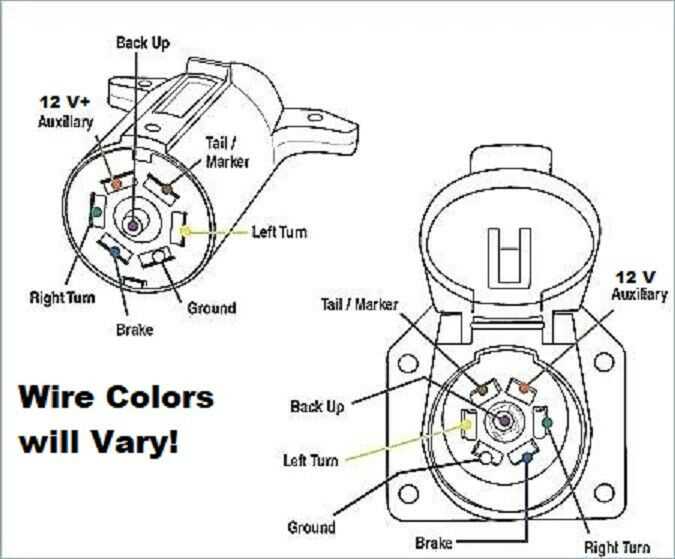
Begin by labeling all cables before attaching them to the plug. White is normally the ground line, providing a safe return path for all circuits. Confirm continuity with a tester before final connection.
Yellow typically handles left signal lights. Check for resistance under 2 ohms to ensure it is not damaged. Mark the cable with tape to avoid confusion during assembly.
Green is usually assigned to right signal lights. Test with a 12-volt battery to verify the correct operation before securing it in place.
Brown manages running lights. It should remain live when the ignition is on. Inspect insulation for cracks that could lead to shorts.
Blue handles braking circuits. Use a current tester to confirm activation coincides with pedal pressure. Ensure the terminal is firmly seated in the housing.
Red supplies auxiliary or reverse power. Keep it separate from signal lines to prevent interference. Label clearly to prevent accidental swapping.
Purple or black may be used for backup lights depending on the system. Check polarity to avoid reversed operation which can cause confusion on the road.
After identification, organize the cables using clips or ties to prevent crossing or abrasion.
- Check each pin tension
- Verify signal paths
- Confirm ground continuity
This ensures safe and reliable operation for all circuits under load.