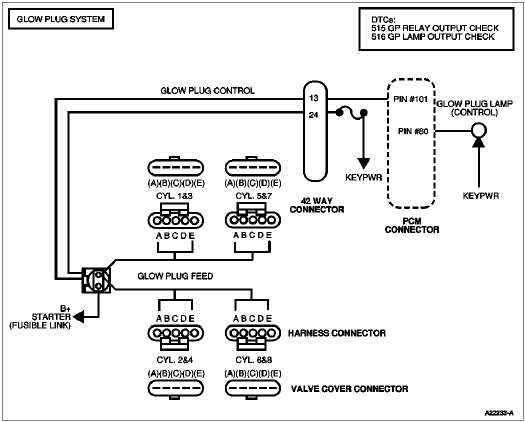
Use a detailed electrical layout before checking sensors, injectors, or control modules on the Ford Powerstroke diesel produced from 1994 to 2003. A labeled circuit map allows you to trace each conductor between the engine control unit, valve cover connectors, glow plug relay, camshaft position sensor, and injector drivers. Without this reference, diagnosing a no-start condition or rough idle can take hours longer.
The Powerstroke engine uses a complex cable assembly with dozens of color-coded conductors. Each line connects specific components such as the IDM module, ICP sensor, IPR valve, and under-valve-cover injector connectors. For example, the cam sensor signal travels through a shielded pair leading directly to the control unit, while injector signals run through the valve cover pass-through connectors that often fail due to heat and vibration.
A clear circuit illustration also helps identify connector pin locations and wire color codes. Ford commonly uses combinations such as red with light green stripe for switched power and black with white stripe for ground circuits. Matching these markings with the vehicle’s electrical map allows quick continuity checks using a multimeter and prevents accidental connection errors during repair or engine work.
Technicians frequently rely on these circuit references during injector replacement, glow plug relay service, sensor diagnostics, or engine swaps. With the correct electrical layout, it becomes easier to trace signal paths, confirm voltage supply, and isolate damaged conductors hidden inside the engine loom.
Powerstroke Wiring Harness Diagram With Connector Pinout and Wire Color Reference
Check connector pin numbering before probing any circuit on the Powerstroke diesel electrical network. Each plug linked to the engine control unit follows a fixed pin layout that determines injector signals, sensor input lines, and ground paths. Misreading a pin position can lead to false voltage readings and unnecessary part replacement.
The injector control module connection uses multiple signal lines routed through valve cover pass-through connectors. Each injector receives a dedicated pair that carries high-voltage pulses from the driver module. Inside the engine loom these conductors are grouped in shielded bundles designed to reduce signal noise produced by the high current switching process.
Wire color identification helps locate circuits quickly. Ford commonly assigns red with light green stripe to switched ignition power, black with white stripe to chassis ground, and gray with red stripe to sensor return circuits. Matching these colors during continuity tests allows quick tracing between the control unit, sensors, and actuator connectors.
The camshaft position sensor circuit normally includes a shielded cable with a signal line, ground reference, and protective shielding layer. This shield connects to ground near the control module connector and prevents interference from injector driver pulses and alternator output.
Injector connector pin layout
Each under-valve-cover injector connector uses two pins carrying high-voltage commands from the driver module. These lines enter the valve cover through pass-through plugs located near the gasket edge. Heat and oil exposure often damage these connectors, leading to intermittent misfire or cylinder drop under load.
Testing continuity across the valve cover pass-through plug helps locate internal loom damage. A multimeter set to resistance mode should show near zero resistance between the driver module connector and the injector plug. Any reading above a few ohms usually indicates a damaged conductor or corroded contact.
Sensor and power circuit identification
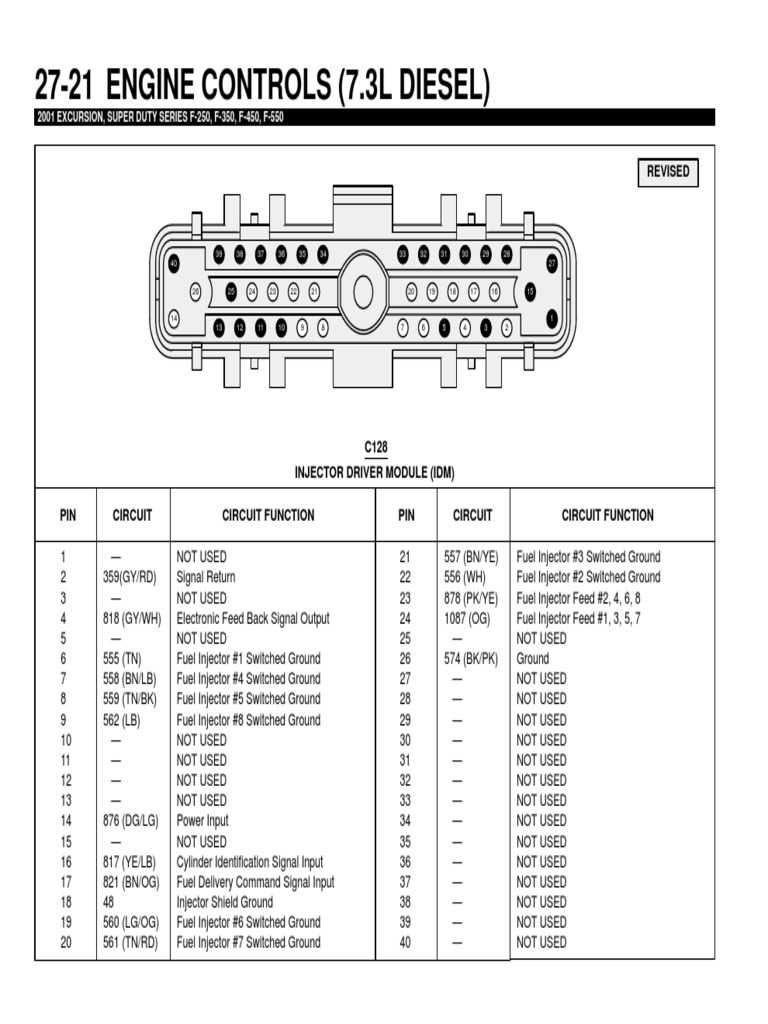
Sensor lines such as ICP pressure, intake air temperature, and throttle position travel through separate branches of the engine cable assembly. These circuits operate on five-volt reference signals supplied by the control unit. Color coding often includes gray with red stripe for reference voltage and brown with white stripe for signal return.
Tracing these conductors on a labeled circuit map allows quick fault isolation. By following each colored line between connectors and confirming voltage presence at the correct pin locations, technicians can identify broken conductors, loose terminals, or damaged insulation hidden inside the engine loom.
Injector Wiring Harness Layout and Connector Pin Identification for the 7.3 Powerstroke
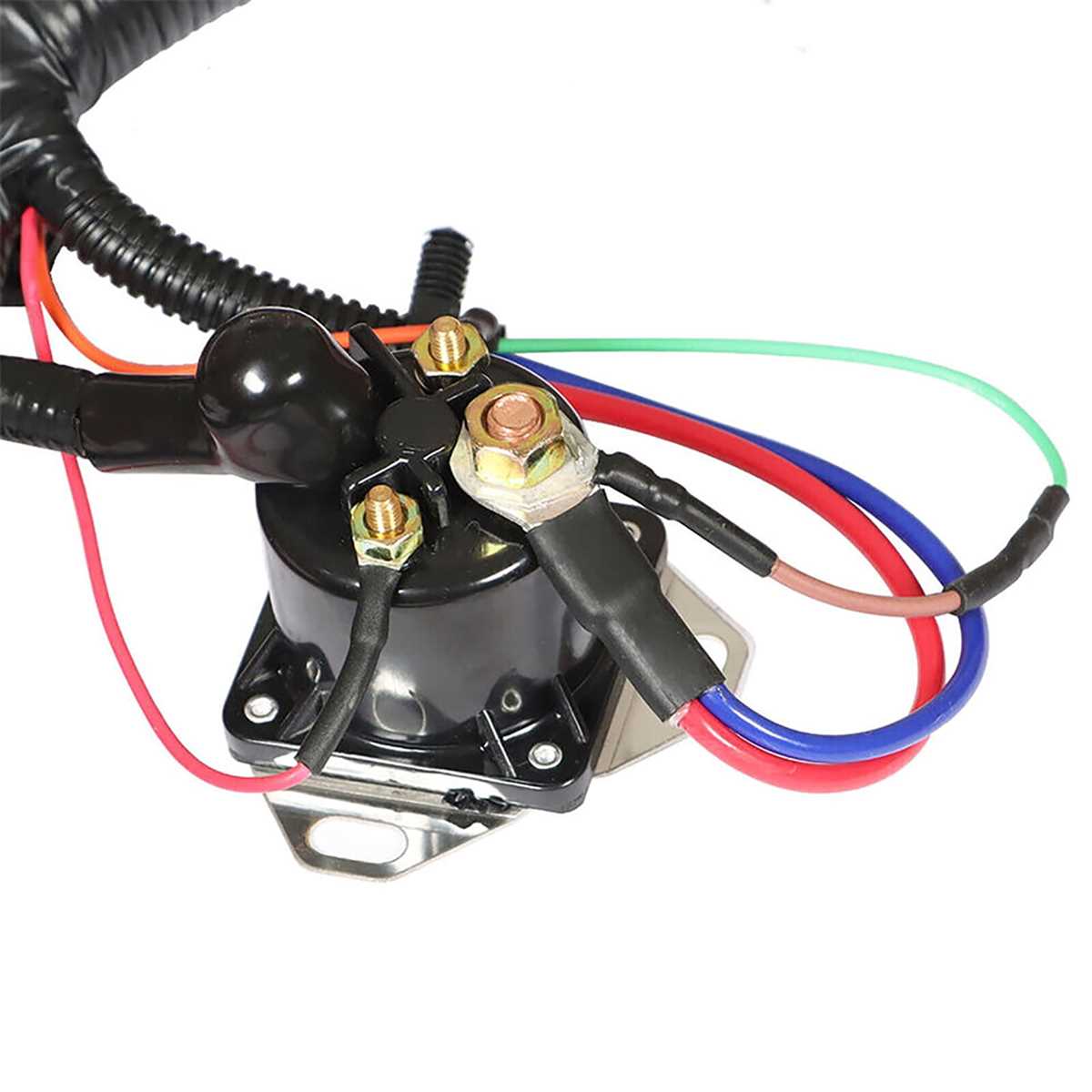
Locate the injector connector path beneath each valve cover before testing injector circuits on the Powerstroke diesel. The internal cable assembly runs through pass-through plugs mounted in the valve cover gasket and connects directly to the injector solenoids. Heat exposure and oil contamination frequently damage these internal conductors, producing cylinder misfire or intermittent injector response.
The injector control module sends high-voltage pulses through paired conductors routed to each cylinder. Every injector uses a two-pin connector carrying the command signal and return path. These paired lines are bundled together inside the engine loom and travel toward the external connector positioned near the valve cover edge.
Identify connector pins using the molded numbering on the plastic housing. Typical injector plug layout includes:
- Pin 1 – command signal from injector driver module
- Pin 2 – return circuit leading back to the driver module
- Shielded conductor grouping inside the engine loom to reduce electrical noise
External connectors link the under-cover injector leads to the main engine cable bundle. These pass-through plugs are common failure points because the internal contacts sit directly above hot engine components. A loose terminal or burnt contact inside this connector interrupts the pulse signal and stops the injector from firing.
Follow the conductor path from the injector driver module toward the valve cover connectors during circuit tracing. The route normally includes:
- Driver module connector carrying high-voltage injector commands
- Main engine cable bundle running along the intake manifold
- Valve cover pass-through plug
- Under-cover injector lead terminating at the injector solenoid
Use resistance testing across each injector lead during diagnostics. A multimeter connected between the driver module connector and the injector plug should show near zero resistance. Higher values usually indicate a damaged conductor inside the valve cover assembly or corrosion at the pass-through connector contacts.