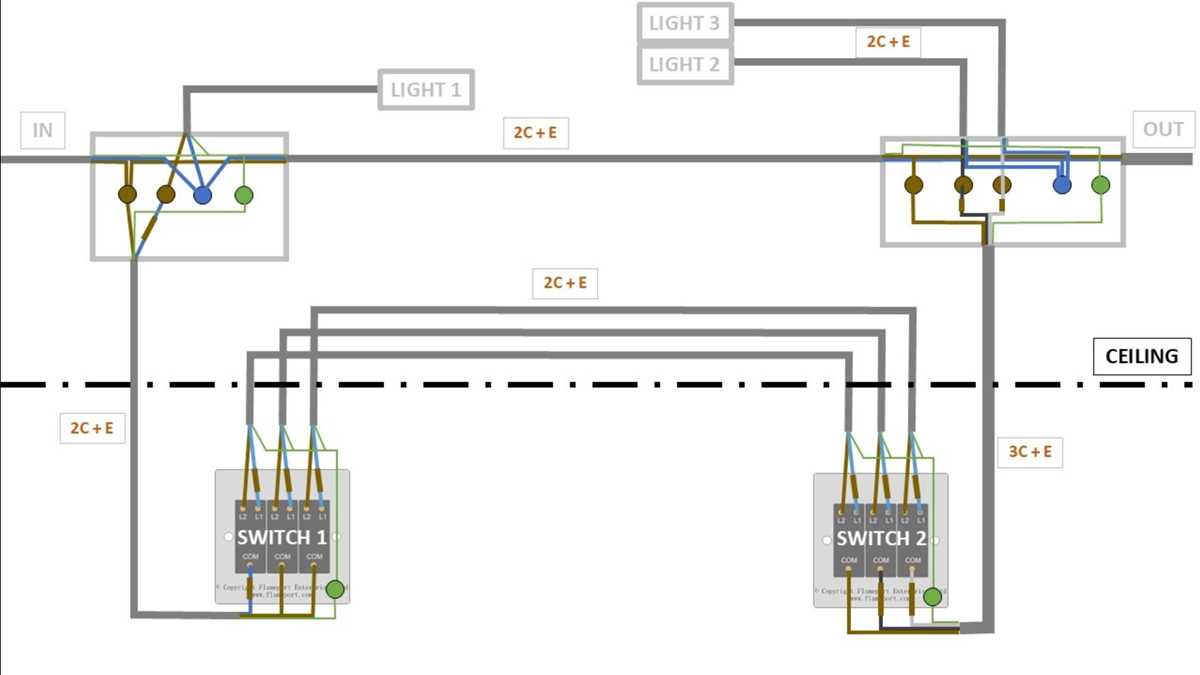
Start by selecting the correct wiring layout. A 3-way configuration requires two switches that control the same light or appliance from different locations. Ensure you have the correct number of terminals on each switch and that the power source is placed correctly in the setup. The first switch will connect to the power input, while the second switch will control the flow of electricity to the light or device.
Use the right connectors for secure and safe connections. For this type of installation, it’s important to use high-quality wire connectors that can safely handle the load. Each terminal on the switches should be properly connected with the appropriate wire gauge to avoid overheating or electrical faults.
Understand the role of each wire in the system. The two key wires in this setup are the common wire (which brings power to the switch) and the traveler wires, which connect the two switches. Properly connecting these wires is crucial for the switches to operate correctly and allow the light or appliance to turn on and off from either switch.
To avoid future problems, label and organize each connection clearly. This will help prevent mistakes during installation and provide a quick reference for any future troubleshooting or upgrades.
3 Way Switch Wiring Setup
Ensure proper component selection before starting any electrical installation. For this configuration, you’ll need two devices with three terminals each, along with the appropriate wiring (typically 14/3 or 12/3 gauge wire, depending on the amperage). Make sure each device is rated for the power it will handle and that the correct wire size is used to avoid overloading.
Identify the common terminal on each device. This terminal is critical as it connects to the power source on the first device and the load (light or appliance) on the second. It’s important to clearly identify which terminal is the common one to avoid mistakes that could lead to malfunctioning connections.
Properly Connect the Traveler Wires
Traveler wires are key in this layout. These are the two wires that carry power between the two devices, allowing either switch to control the light. Connect one traveler wire from the first device to the second device, ensuring both are attached to the correct terminals on each device. Traveler wires should always be attached to the two remaining terminals, never to the common terminal.
- Ensure both traveler wires are connected securely to the correct terminals on each device.
- Check the connections twice before securing the wiring in place.
Pay attention to grounding. The ground wire (usually green or bare) should be attached to the grounding terminal on both devices and connected to the ground in the electrical panel. This ensures safety and protects the system from electrical faults.
Double-check for continuity once the installation is complete. Use a multimeter to verify that there is proper continuity between the two devices and that the circuit will be able to control the light or device as intended. This step is crucial for ensuring that everything functions smoothly after power is turned on.
Troubleshooting Common Issues
Faulty connections are the most common issue when a setup isn’t functioning as expected. If the light doesn’t respond or works intermittently, inspect each connection carefully. Look for loose wires or incorrect terminal placements, especially for the common and traveler connections.
Lastly, label your wiring setup. By clearly marking each connection and its purpose (e.g., “common,” “traveler 1,” “traveler 2”), you make troubleshooting in the future much easier. This step can save significant time and effort if repairs or adjustments are needed later on.
Understanding the Components of a 3 Way Switch Setup
Identify the key components before starting the installation. A 3-terminal device is needed for the control mechanism, typically referred to as a 3-way device. This setup includes a common terminal, which connects to the power supply on one end and the load (light or appliance) on the other end. Additionally, the remaining two terminals, often called traveler terminals, carry the signal between both control devices.
Understand the traveler wires. These wires are responsible for carrying the current between the two devices, allowing for control from either location. There should be two traveler wires: one coming from the first device and one from the second. Both of these should be connected to the traveler terminals on each unit, ensuring that the path is clear for current flow.
Grounding the Devices
Proper grounding is vital for safety. Each device in this setup has a grounding terminal, typically marked with the ground symbol or a green screw. The ground wire (often green or bare) should be attached to this terminal to prevent electrical hazards. This ensures that, in case of a short circuit, the electrical flow is directed safely to the ground rather than causing damage or fires.
Ensuring Proper Voltage and Current Flow
Voltage regulation is key to a functional and safe system. Make sure that the voltage supply matches the needs of the entire setup. An unstable or incorrect voltage can lead to malfunction or even damage to the control devices or connected appliances. Double-check the voltage before starting the installation to avoid problems later.