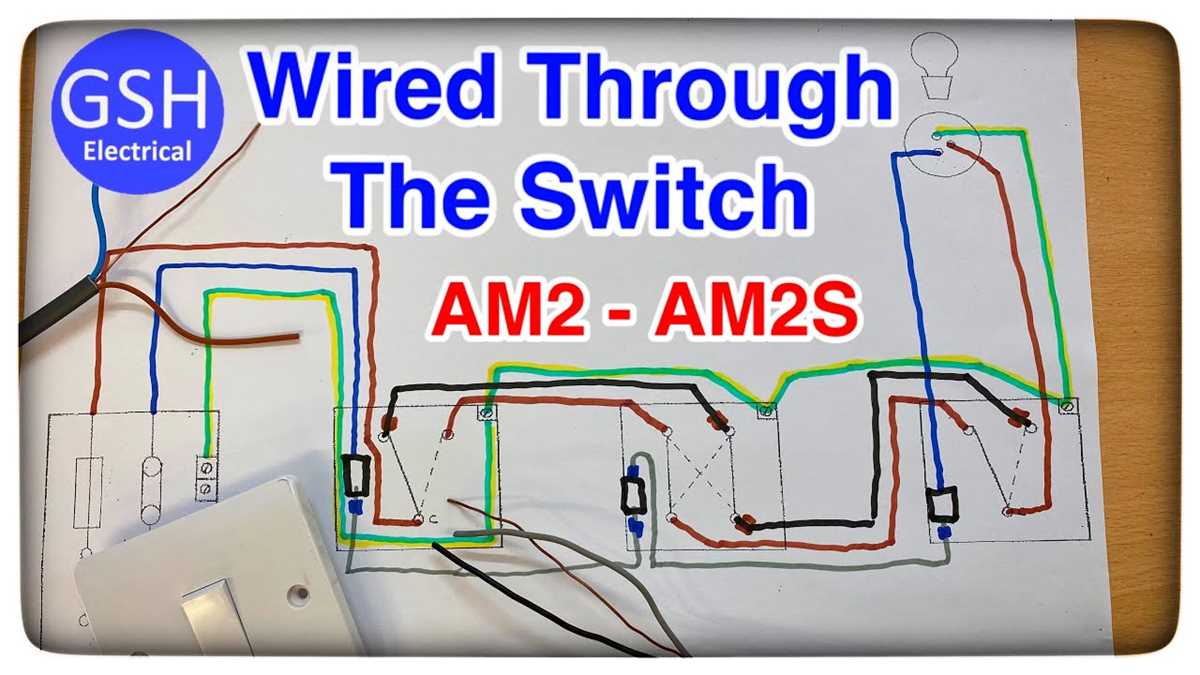
Use two changeover switches plus one cross switch to operate a single lamp from three separate positions. Place the cross switch between the two changeover devices and route the pair of traveler conductors through it. The supply phase enters the common terminal of the first changeover unit, while the common terminal of the second feeds the lamp. Neutral goes directly to the fixture without passing through the control devices.
The two traveler conductors leaving the first changeover unit connect to the input terminals of the cross switch. From its output terminals, run another pair toward the second changeover device. This arrangement allows the cross unit to swap conductor paths internally, which alters the state of the lamp regardless of the current position of the other controls. Such a configuration is widely used in stairwells, long corridors, and multi-level homes.
Use copper conductors with cross-section 1.5 mm² for residential lamp loads up to 10 A. Color identification reduces installation errors: brown or black for phase, blue for neutral, and green-yellow for grounding. Keep traveler conductors the same color pair along the entire route; many installers select black and gray for clarity. This prevents confusion when troubleshooting or expanding the system.
Inside each switch box, tighten terminals firmly and keep conductor length around 10–12 cm for convenient servicing. Before energizing the system, verify continuity with a multimeter to confirm that the cross switch correctly swaps the traveler pair and that the lamp receives phase only through the final changeover device. Proper testing avoids flicker, unwanted activation, and premature switch wear.
Connection Layout for Dual-Control Lamp System with Cross Switch
Install two changeover wall switches at the ends of the control chain and place a cross switch between them so a single lamp can be operated from three points. Feed phase from the distribution panel into the common terminal of the first switch, route two traveler conductors toward the cross switch, continue the pair to the final switch, then connect the output terminal to the lamp phase contact.
Use a standard residential supply of 220–240 V with copper conductors rated 1.5 mm². Cable identification reduces installation errors and simplifies maintenance tasks:
- brown or black – incoming phase conductor
- blue – neutral line from panel to fixture
- green-yellow – grounding conductor
- white or grey – traveler pair between switches
The first switch directs phase toward one of two traveler conductors. Inside the cross switch the pair either passes straight through or swaps position depending on toggle state. The final switch receives the pair and selects which conductor delivers phase to the lamp. Each toggle changes continuity along the path, causing the lamp to switch on or off.
Junction Box Connections
All splices should remain inside an accessible ceiling box. Organize conductors clearly so troubleshooting remains simple later.
- incoming phase joined to the common terminal wire of the first switch
- two traveler conductors linked from first switch to cross switch
- second traveler pair routed from cross switch to final switch
- output lead from final switch connected to the lamp phase terminal
- neutral conductor linked directly between panel and lamp holder
- ground conductors bonded together and connected to metal boxes
Run cables through PVC conduit or wall channels at least 30 mm from water pipes and 100 mm from heating ducts. Leave 12–15 cm of spare conductor inside each wall box so terminals can be reconnected without pulling new cable.
Operation Logic
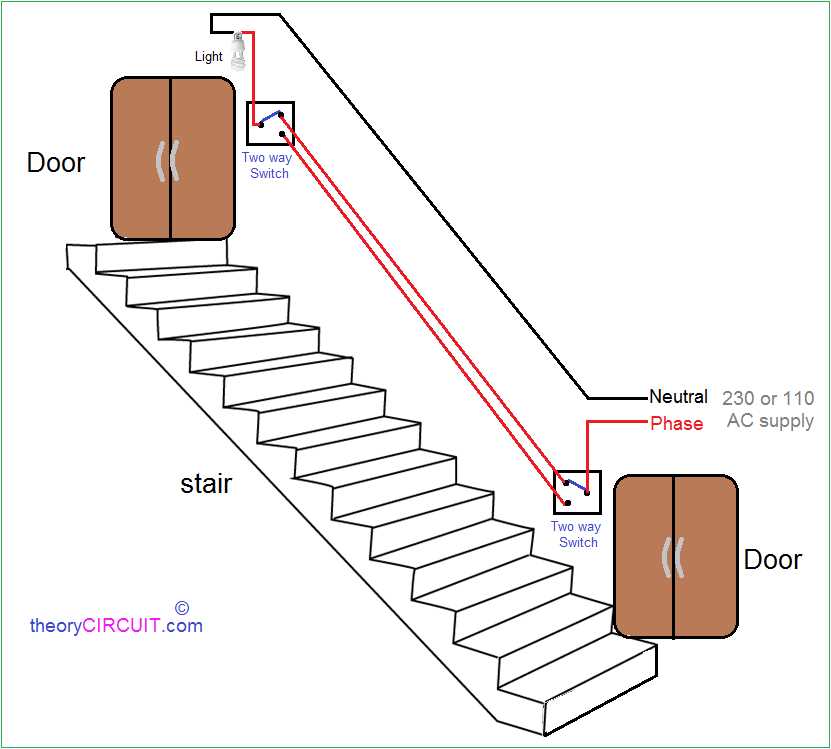
The lamp state changes whenever any switch alters the traveler path. A straight traveler connection through the cross switch keeps the original path from the first switch; a crossed connection redirects phase to the opposite traveler. This mechanism allows control from three positions along a hallway, staircase, or long room.
For installations requiring four or more control points, insert additional cross switches between the two changeover switches. Each added device receives the traveler pair and outputs another pair while flipping their paths internally.
After installation, test voltage at the common terminal of the first switch using a multimeter set to AC range above 250 V. Toggle each switch sequentially; the lamp should change state every time. If the lamp remains fixed, inspect traveler continuity and terminal screws inside the junction box.