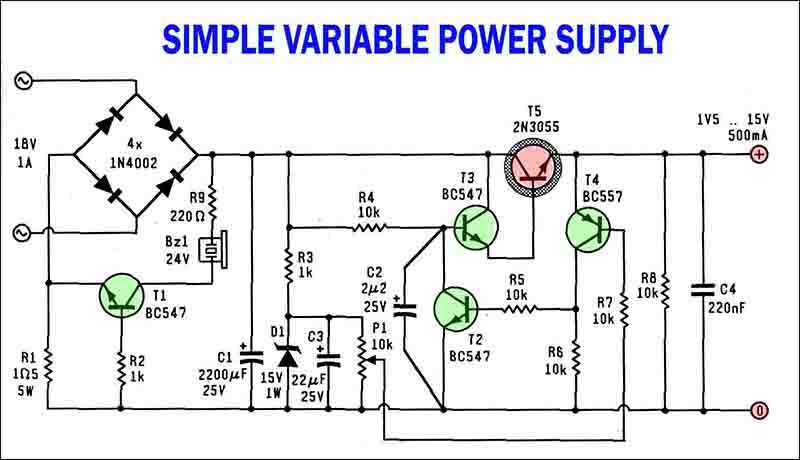
To create a stable setup with two voltage outputs, start by selecting the right components, such as a transformer with multiple windings and rectifiers suited for handling different voltages. The first step in any reliable build is ensuring that the transformer’s specifications align with your needs.
Next, choose a rectifier that can convert AC voltage into DC while maintaining a balanced output. You will also need to consider capacitors that help filter the signal, ensuring smooth and stable operation for connected devices.
Once the components are selected, carefully plan the layout and wiring connections, ensuring there is no interference or short circuits. Proper insulation and heat management are crucial to prevent overheating during use.
After completing the setup, conduct a series of tests to verify the voltage levels and check the reliability of the system under load. Adjustments might be necessary if the outputs are not stable or show fluctuations.
15V Dual Power System Design
Begin by selecting a transformer with dual output capabilities, capable of providing the required voltages for your application. A 15V transformer with two separate secondary windings is ideal for this type of system, ensuring you can achieve positive and negative voltages with respect to a common ground.
Use rectifiers to convert the AC signal from the transformer into DC. A full-wave bridge rectifier works well for this setup, as it can effectively utilize both halves of the AC waveform, providing a smoother output with minimal ripple.
To smooth the output and reduce voltage fluctuations, include filtering capacitors in the design. Electrolytic capacitors with appropriate voltage ratings should be placed across the rectifier outputs, helping to stabilize the DC output.
Next, implement voltage regulators to ensure the output remains constant. The LM7815 is a reliable choice for the positive side, providing a stable 15V output, while an LM7915 can be used for the negative side, creating the required negative voltage.
Incorporate heat sinks to dissipate heat generated by the voltage regulators and rectifiers, particularly if the system will be running at higher currents. These components can get hot and cause performance issues or damage if not properly cooled.
For better performance, use low ESR (Equivalent Series Resistance) capacitors at the output of the voltage regulators. These help reduce noise and improve stability in sensitive applications.
When designing the layout, make sure to minimize the distance between components and use thick traces for current-carrying paths to reduce power loss and prevent overheating. Proper grounding is crucial for preventing electrical noise and interference.
Finally, test the system under load conditions to ensure the voltages are stable and within the desired range. Monitor the temperature of the components and adjust heat dissipation if necessary to avoid overheating during extended use.
Choosing the Right Components for a Dual Power Setup
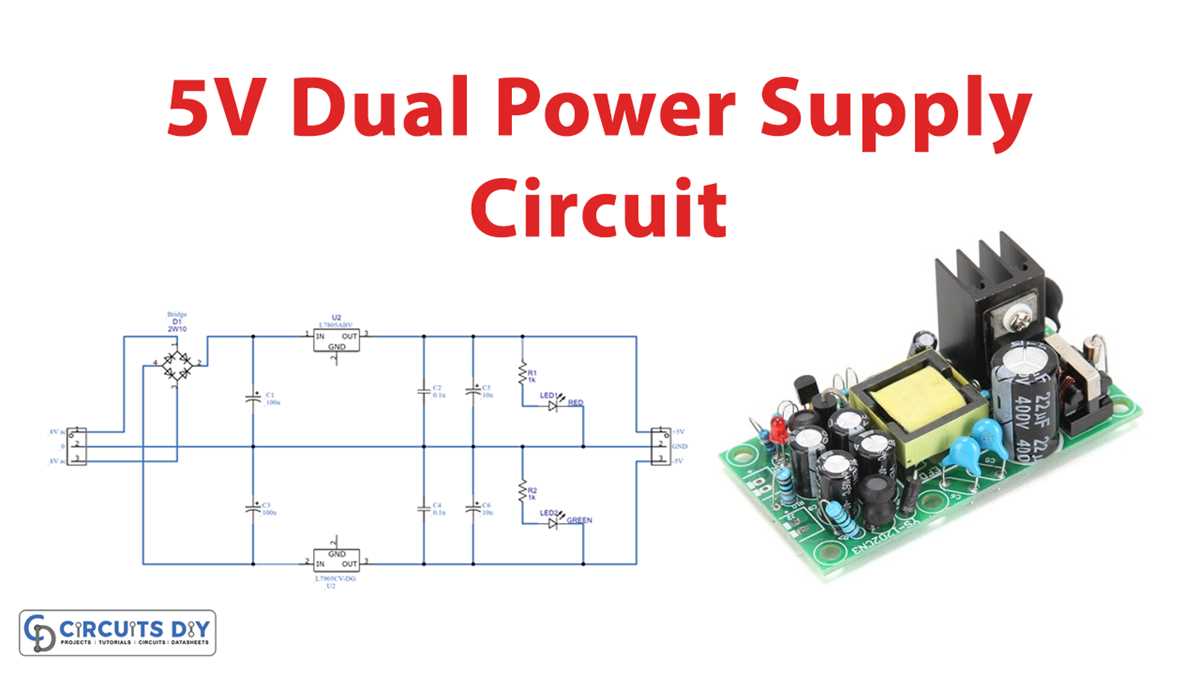
Select a transformer with two separate secondary windings that provide the necessary voltages. A transformer with a center-tapped secondary winding can be used for this application, as it allows you to generate both positive and negative voltages from the same source.
Choose rectifiers that are capable of handling the current requirements of your setup. A bridge rectifier is a good choice for its simplicity and efficiency in converting alternating current into direct current. Ensure that the rectifier’s voltage and current ratings are higher than the maximum values expected in the circuit.
Capacitors are necessary to filter out the ripples in the rectified output. Select electrolytic capacitors with appropriate voltage and capacitance values. Typically, a 2200 µF or 3300 µF capacitor rated for higher than the rectifier’s DC voltage will suffice to smooth the signal and stabilize the output.
Voltage regulators are a key component for stabilizing the output. Use linear regulators such as the LM7815 for the positive rail and LM7915 for the negative rail. These components are designed to maintain a stable voltage despite variations in the input or load conditions.
Ensure that your voltage regulators are properly heat-sinked. These components can generate significant heat under load, and without adequate cooling, they may overheat and fail. Attach heat sinks to both the positive and negative regulators to increase their longevity and reliability.
Use low ESR capacitors at the input and output of the voltage regulators. These help in minimizing noise and improve the stability of the voltage output. A value of around 0.1 µF for input capacitors and 10 µF for output capacitors is commonly recommended.
Finally, plan your layout carefully to minimize power losses and prevent short circuits. Use thick copper traces for the current paths and ensure good grounding practices to avoid issues with noise and instability. Testing the setup under load conditions will help ensure everything functions as expected.